(WCS – R03/2026)
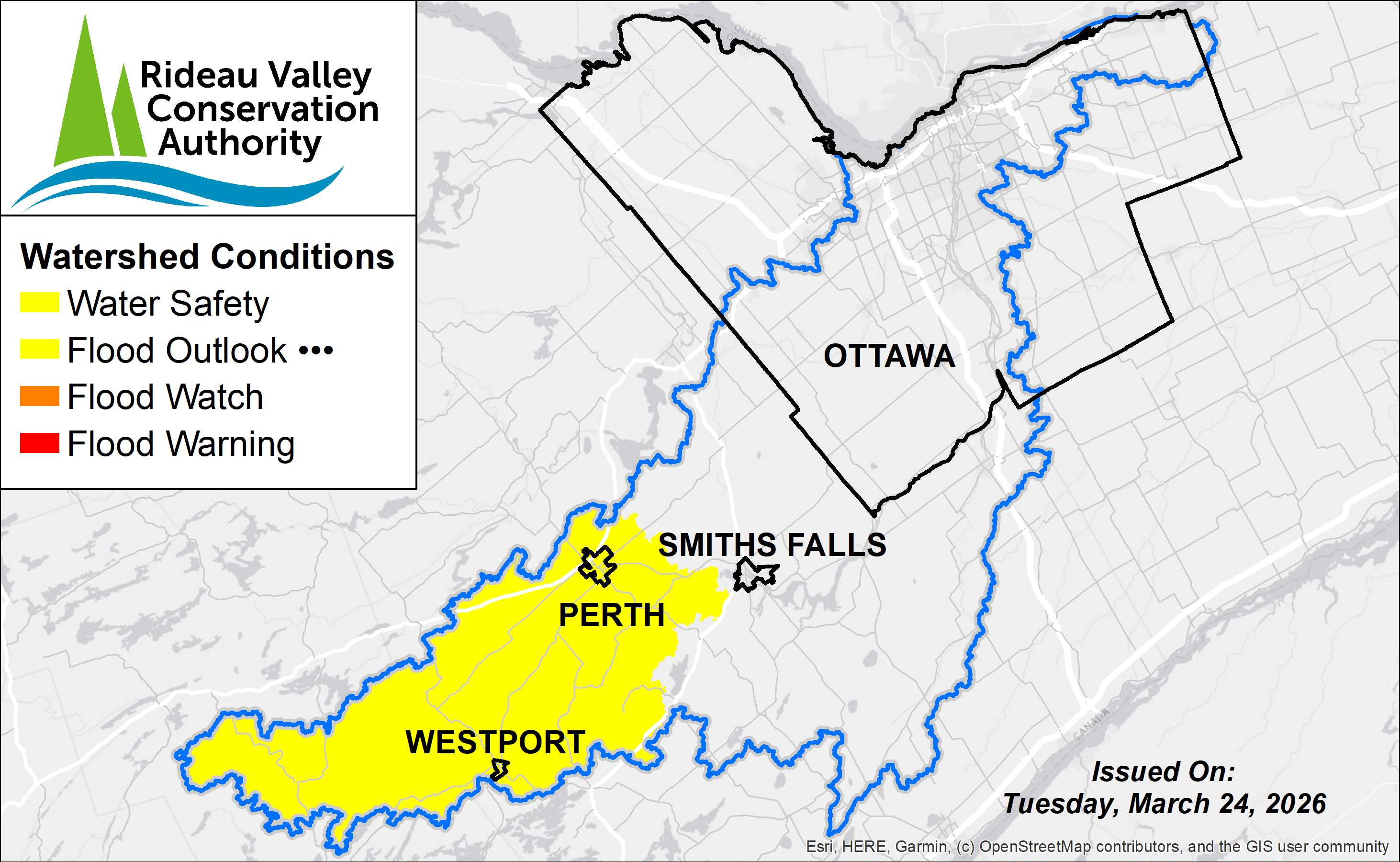
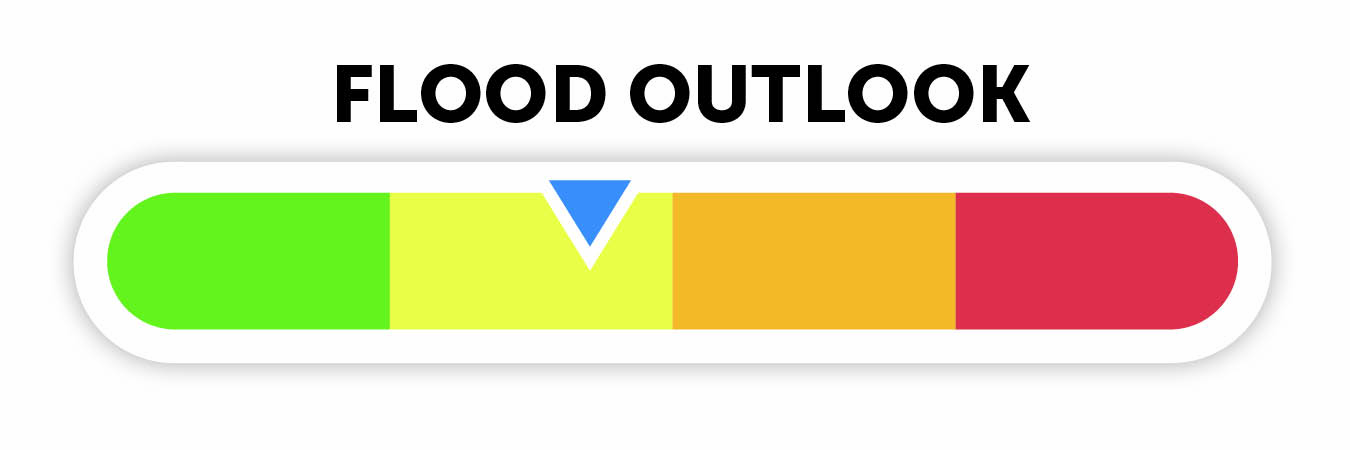
Water levels will remain elevated across the Rideau Valley watershed this week as moderate rainfall combines with ongoing snowmelt. The upper watershed lakes, including Bobs and Christie Lakes, are already higher than normal for this time of year and have reduced capacity to absorb additional runoff. While widespread flooding is not anticipated, localized water level increases are possible. A Flood Outlook is in effect for the upper watershed, and a Water Safety Statement remains in place for the entire watershed. Residents in low-lying and flood-prone areas are advised to monitor conditions and take appropriate precautions.
MORE DETAILS:
Weather Forecast: Environment and Climate Change Canada is forecasting a potential moderate precipitation event mid-week, with total rainfall amounts ranging from 15–30 mm across the Rideau Valley watershed. Forecast guidance between sources suggests high uncertainty in both the timing and total accumulation for this event. The majority of this precipitation is expected to occur between March 25–26, coinciding with a brief warming trend, with daytime highs rising into the 5–15 °C range. Overnight temperatures are expected to remain near or slightly below freezing outside of this period, with limited additional rainfall before or after the event. Temperatures are expected to return to more seasonable conditions by March 27.
Environmental Conditions: Water levels and flows across the Rideau Valley watershed remain elevated due to the ongoing spring freshet. Recent melt and rainfall have contributed to a rapid rise in water levels within the upper watershed lakes, which continue to respond to the early onset of the freshet. While these lakes still have capacity available to store water and moderate downstream conditions, they have filled more quickly than is typical for this time of year. As a result, water levels in some lakes are higher than normal for late March. Although a limited amount of snow remains across much of the watershed, greater snowpack persists in areas surrounding the upper watershed lakes, where conditions remain above seasonal norms. As this remaining snow continues to melt, it will contribute additional runoff to these systems.
Risks: Water levels remain elevated across portions of the Rideau Valley watershed, with localized areas experiencing increased potential for further water level increases. A Flood Outlook is in effect for the upper watershed, including the Bobs and Christie Lake region, based on the following factors:
- Water levels in the upper watershed lakes are higher than normal for this time of year, reducing the amount of available storage for upcoming rainfall and runoff.
- Additional snow remains in areas surrounding the upper watershed lakes, which will continue to contribute runoff as melting progresses.
- The forecast rainfall and melt period may contribute to further increases in water levels and flows.
Location-Specific Considerations: A Water Safety statement remains in effect across the Rideau Valley watershed, due to faster-flowing water, slippery or unstable banks and the potential for minor flooding in low-lying areas.
Upper Rideau Watershed - Bobs Lake & Christie Lake
Water levels within the upper watershed, including Bobs Lake and Christie Lake, have increased in response to recent melt and rainfall and remain elevated for this time of year. Additional increases are possible with continued snowmelt and the forecast mid-week precipitation. A Flood Outlook is being issued for these areas to highlight the potential for further water level increases as spring conditions evolve. Parks Canada staff are actively monitoring conditions and adjusting operations as needed to manage water levels between lakes. Residents in low-lying or flood-prone areas are encouraged to monitor conditions closely over the coming weeks.
Action & Safety Recommendations: Residents in flood-prone areas are advised to closely monitor water levels and flows and take the necessary precautions to protect their property, such as:
- Ensuring sump pumps are clear, in good working condition, and have a backwater valve.
- Keeping a portable backup generator and pump easily accessible.
- Ensuring downspouts are clear and directing water at least 3 m away from the dwelling.
- Securing items that might float away as flows increase.
- Removing valuable items from basements or lower floors that could be subject to flooding.
- Keeping emergency phone numbers handy.
- Familiarizing yourself with your municipality’s Emergency Preparedness Plan.
Residents are reminded that a Water Safety Statement is in effect across the watershed until April 30th and advised to exercise caution when near rivers, streams, and other waterbodies due to the risks described above. Parents should inform their children of these dangers and provide appropriate supervision.
Duration: This Flood Outlook statement is in effect until April 10, 2026 at 11:59 p.m. or until an update has been issued.
For more information, contact:
Justin Robert
Flood Duty Officer
1-800-267-3504 ext. 1194
RVCA Watershed Conditions Statements:
Water Safety – High flows, unstable banks, melting ice or other factors that could be dangerous for recreational users such as anglers, canoeists, hikers, children, pets, etc. Flooding is not expected.
Flood Outlook – Early notice of the potential for flooding based on weather forecasts, calling for heavy rain, snow melt, high winds or other conditions that could lead to high runoff, cause ice jams and/or lakeshore flooding or erosion.
Flood Watch – Flooding is possible in specific watercourses or municipalities. Municipalities, emergency services and individuals in flood prone areas should prepare.
Flood Warning – Flooding is imminent or already occurring in specific watercourses or municipalities.