Shock and sadness, followed by action: that’s how RVCA staff responded when they first noticed a patch of unreported European Water Chestnut in Steven’s Creek last year.
"This is an extremely aggressive aquatic plant, and we’ve seen what it can do if it’s not managed right away,” said City Stream Watch co-ordinator Rosario Castanon Escobar, who was fish sampling in the creek when it was spotted in June 2025. “We immediately made a plan to come back and remove it before it went to seed.”
With support from Parks Canada, RVCA staff returned three times throughout the summer to remove plants as they grew to the surface, and the team believes they have successfully minimized the spread – although they’ll be keeping a close eye on the area for years to come.
Early detection is critical when combating invasive species. Citizen reports on EDDmaps or iNaturalist may be the difference between simply containing a species and eradicating it altogether.
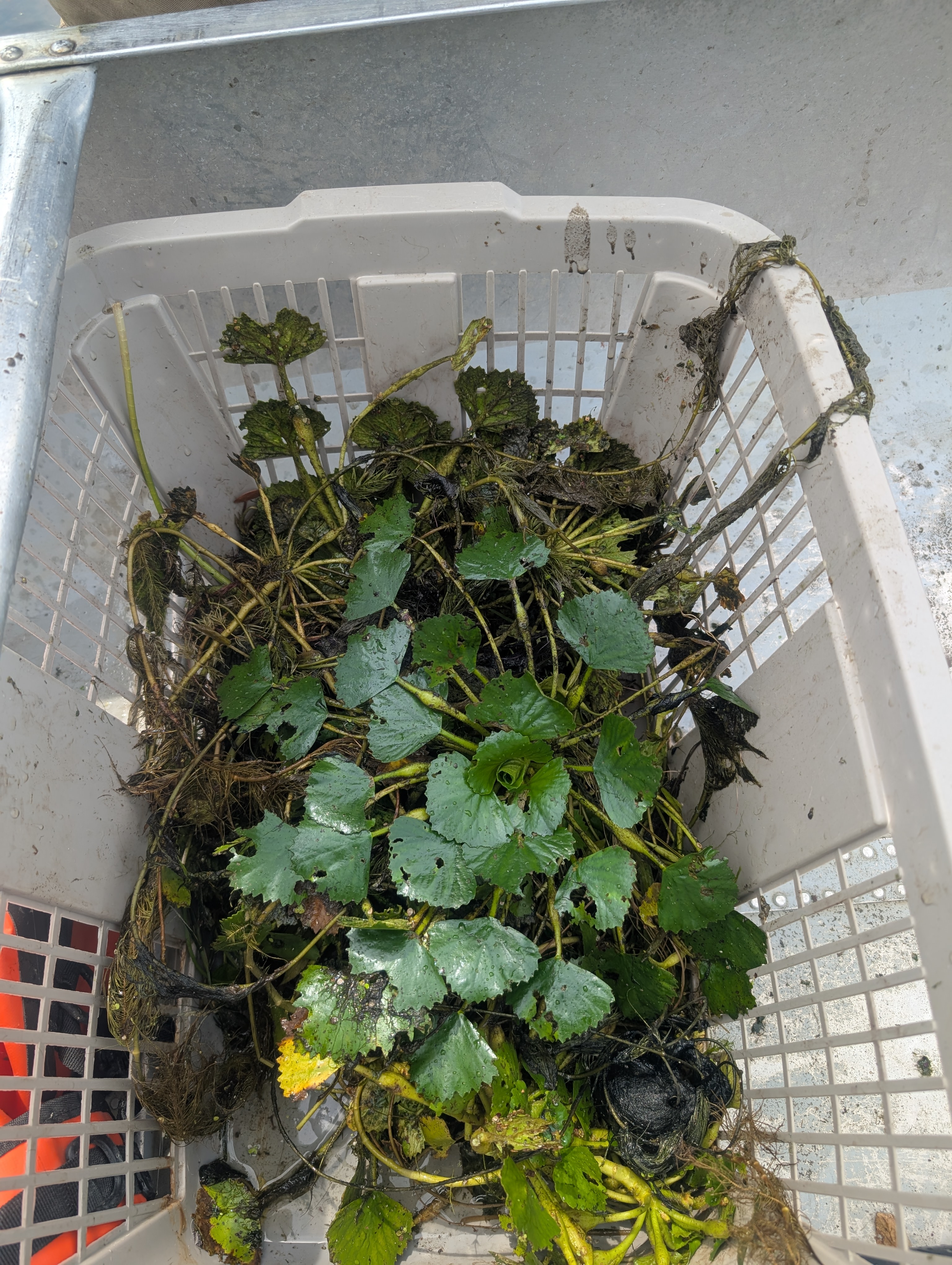
“We monitor those apps for new reports, and take action as soon as we can,” said Castanon Escobar. “The larger a patch of invasive species gets, the harder it is to manage and eradicate, because its seed bank and root systems are so much more established.”
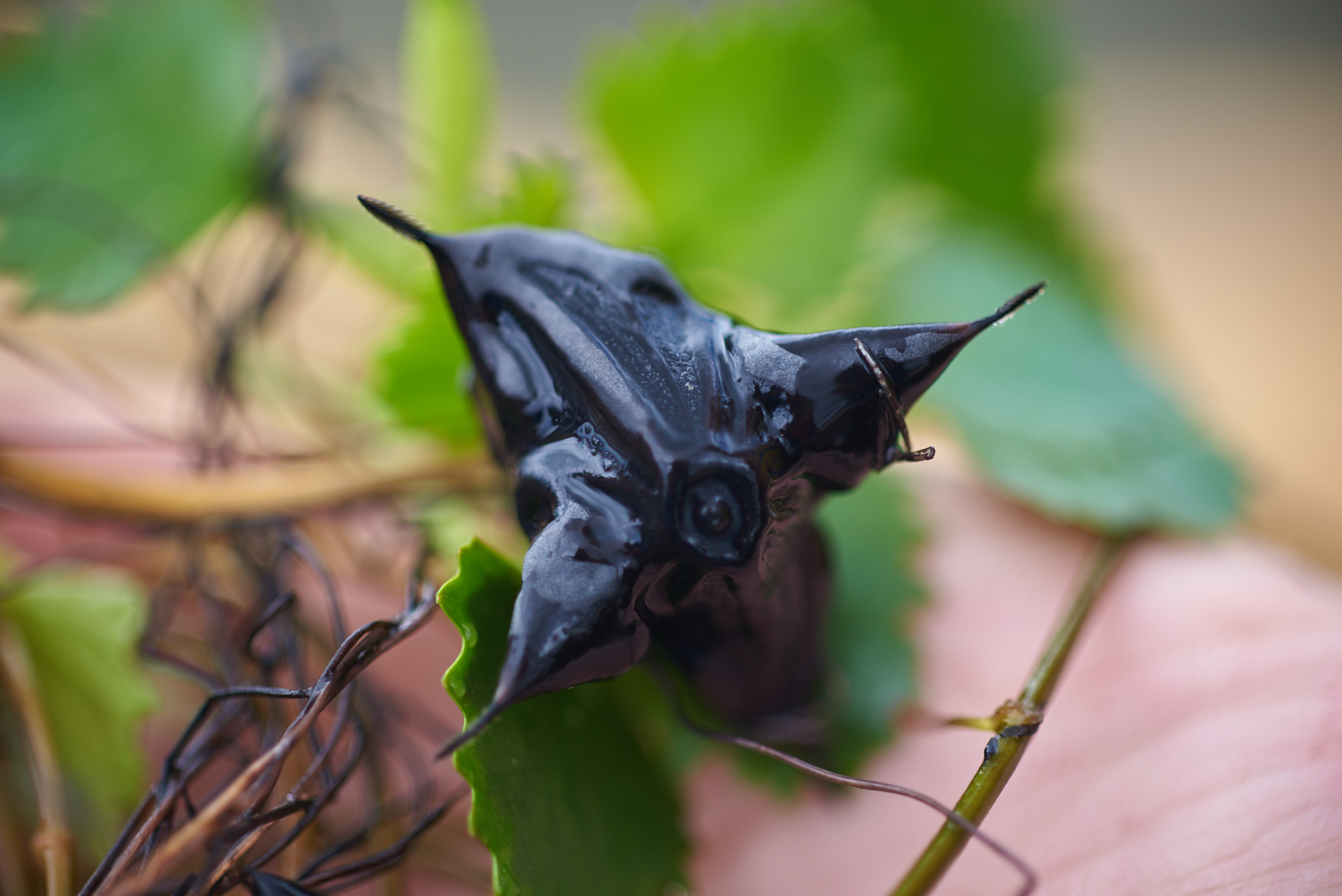
For example, European Water Chestnut’s spiny seeds can live dormant in sediment for up to 10 years – so if you don’t remove it before it goes to seed, you’re all but guaranteed to have more plants in the future.
Even with early detection and removal, staff make sure to monitor the area for several years to ensure there’s no new growth.
European Water Chestnut is a particularly nasty invasive species, as it can spread rapidly into dense floating mats that block light and oxygen from reaching native plants and animals below the surface. It can hamper boating and swimming, and the seeds are painful if stepped on.
Luckily, RVCA has experience eradicating patches of the ornamental pond plant. Staff worked closely with the City of Ottawa, Parks Canada and Ducks Unlimited for nearly a decade to rid the Rideau River’s Black Rapids area of the plant, and last year’s monitoring found no evidence of new growth.
“Black Rapids is a good example of the success we can have if we catch it early,” Castanon Escobar said.
If you spot European Water Chestnut in the Rideau Valley watershed, report it immediately on EDDmaps or iNaturalist, and email