Restoration and Demonstration Projects
Ecological restoration is simply about helping nature heal itself. When an area has been damaged—by development, pollution, erosion, or invasive species—restoration helps bring back native plants, wildlife habitat, and natural processes so the ecosystem can function properly again. In short, it’s fixing what’s broken in the environment so it can stay healthy, support wildlife, and continue providing clean water, stable soil, and other benefits people rely on.
RVCA completes restoration on our own Conservation Lands and partners with public and private landowners. These projects look to restore wildlife habitat, wetland function, stormwater management, stable shoreline all to create a healthier, more resistant watershed.
Scroll below to learn more about restoration projects at RVCA:
Explore Our Projects
- Wetland Restoration
- Habitat Enhancement
- Shoreline Protection
- Stormwater & Low Impact Development
- Tree Planting & Naturalization
- Invasive Species
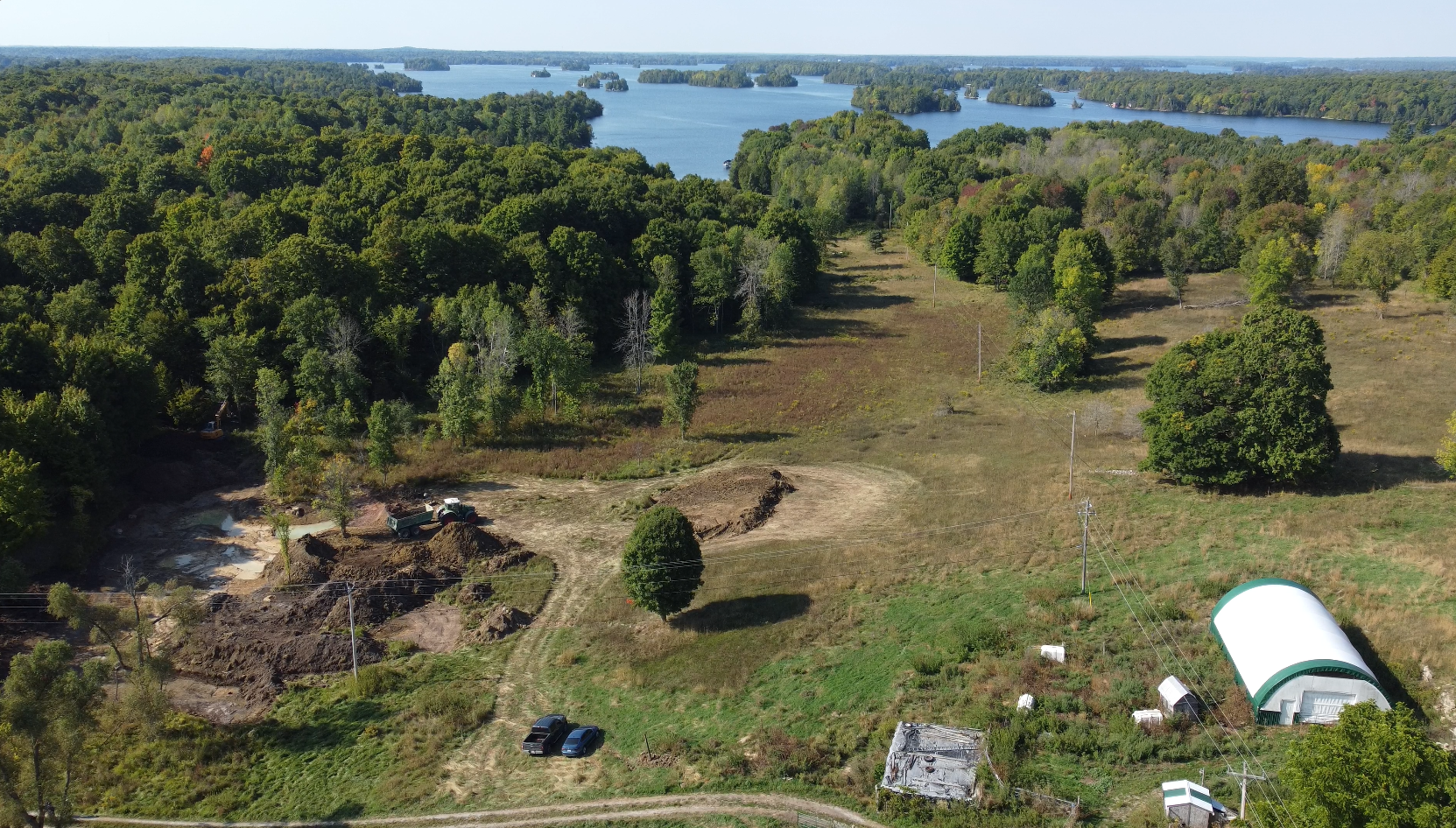
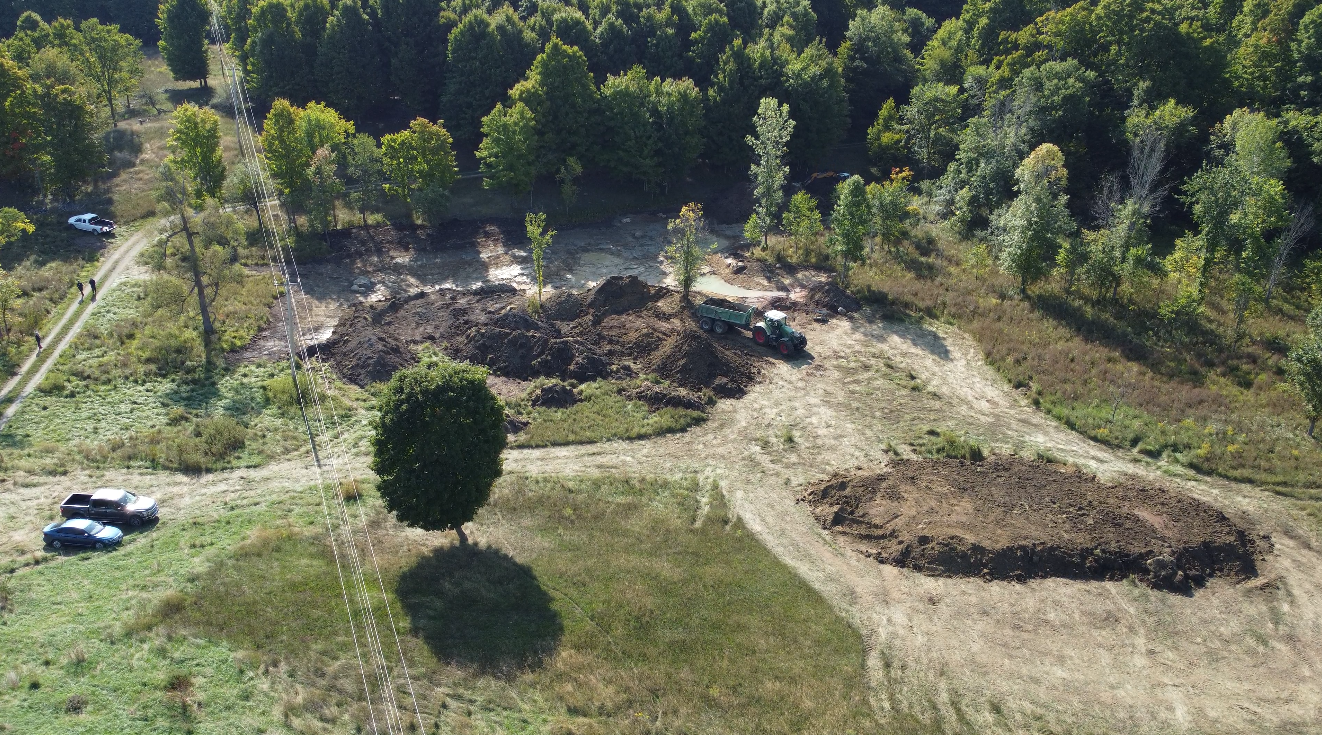
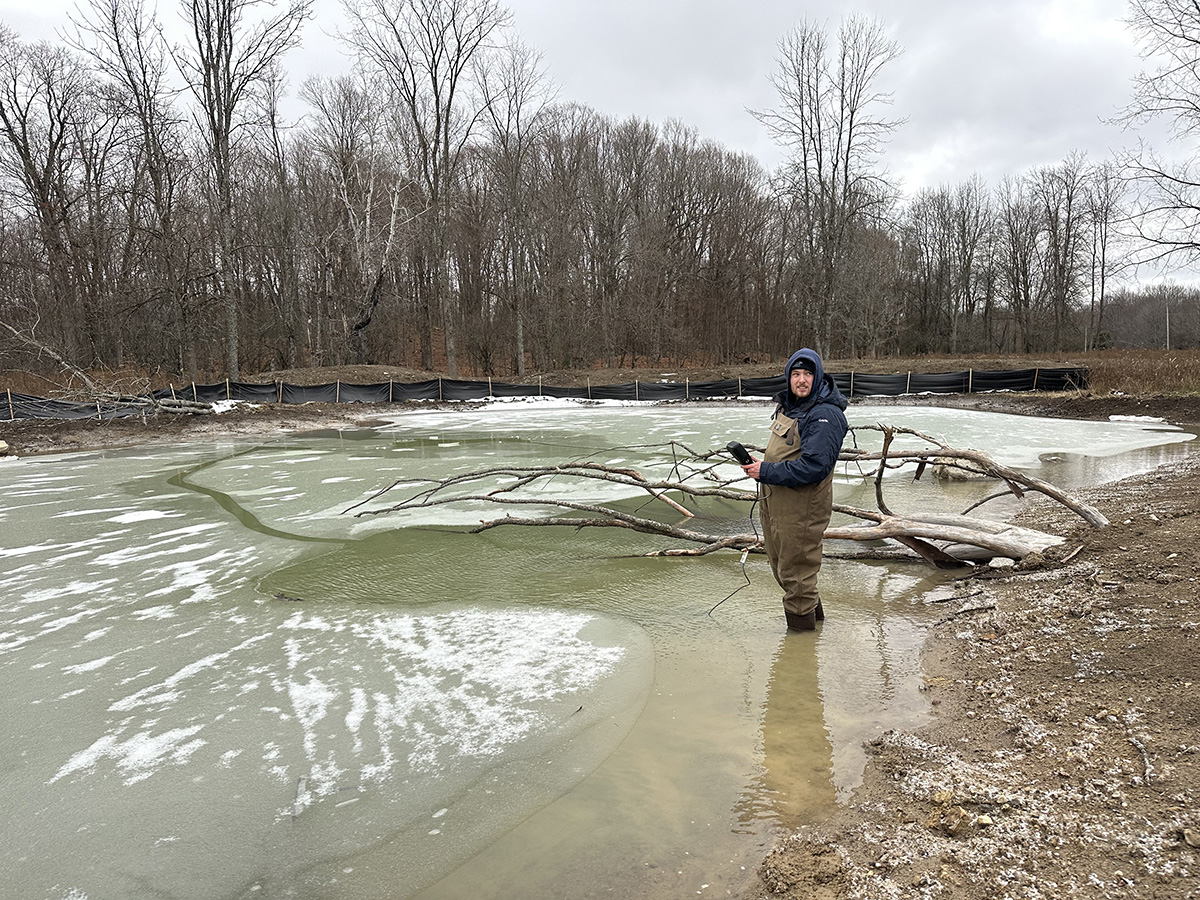
Big Rideau Wetland Creation Project
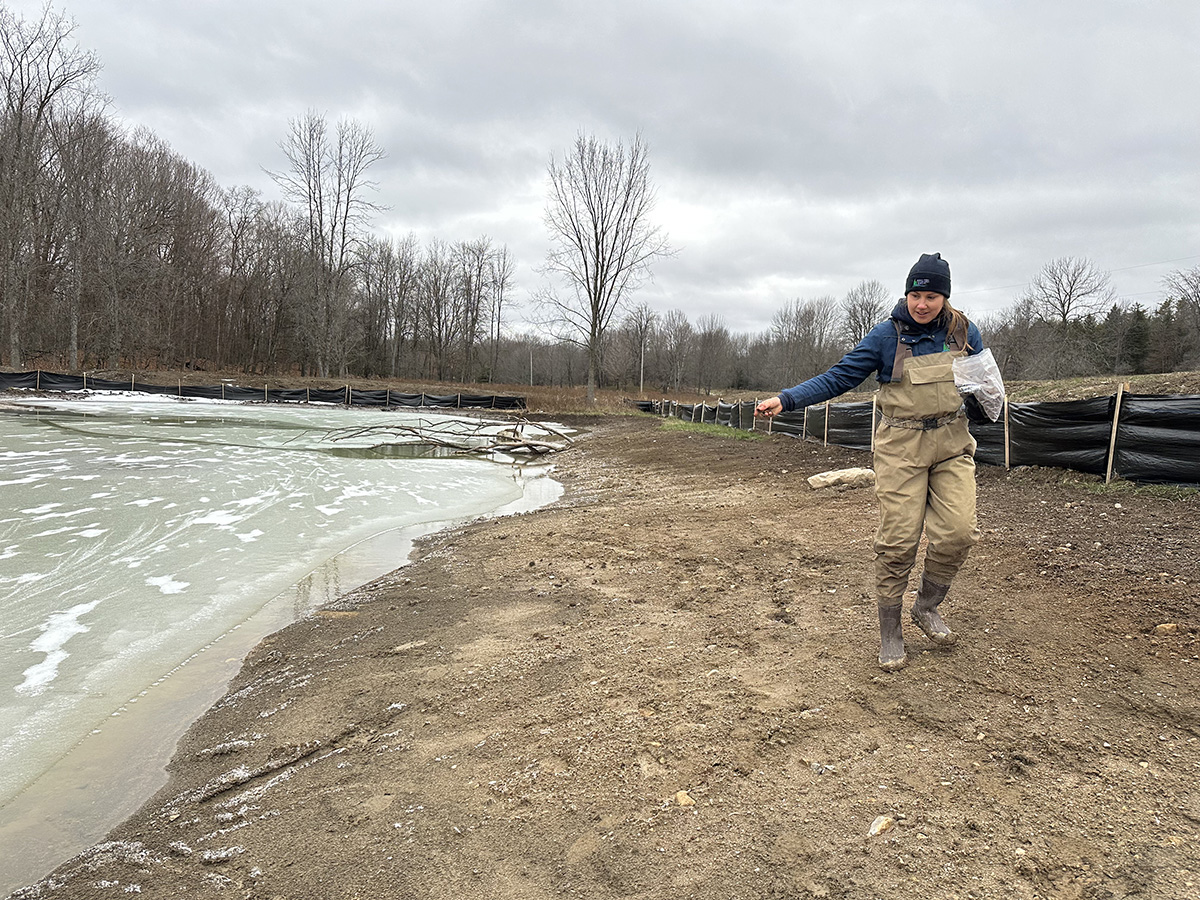
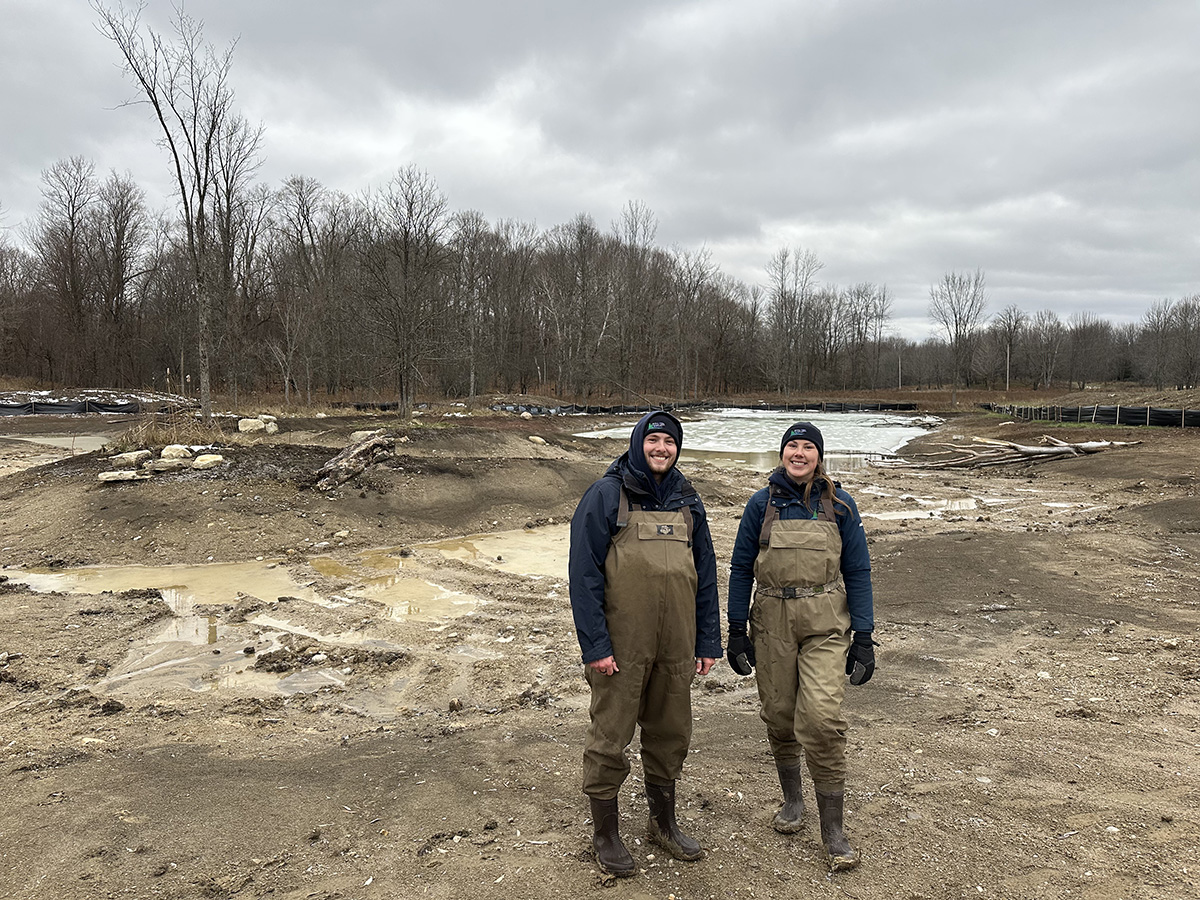
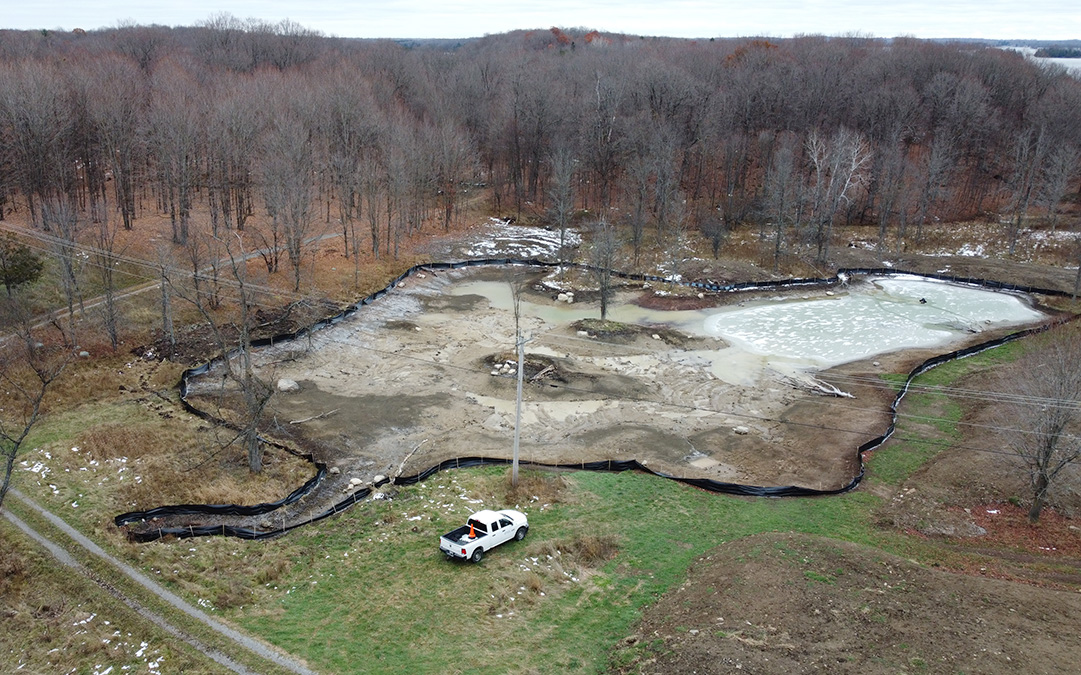
Construction of this one-acre wetland on a donated property on the shores of Big Rideau Lake wrapped up in 2025. Finishing touches will be added over the next few years as shoreline plantings and other features are added. The wetland has variable depths and natural features to support amphibians, turtles and birds. It will also provide critical open-water feeding for the bat species recorded in the nearby woodlands. The property was donated to the Rideau Valley Conservation Foundation in 2023 with the intention to restore it back to a more natural state. Butternut plantings and other stewardship projects are also planned for the property.
More details:
Jebbs Creek Wetland Restoration Project
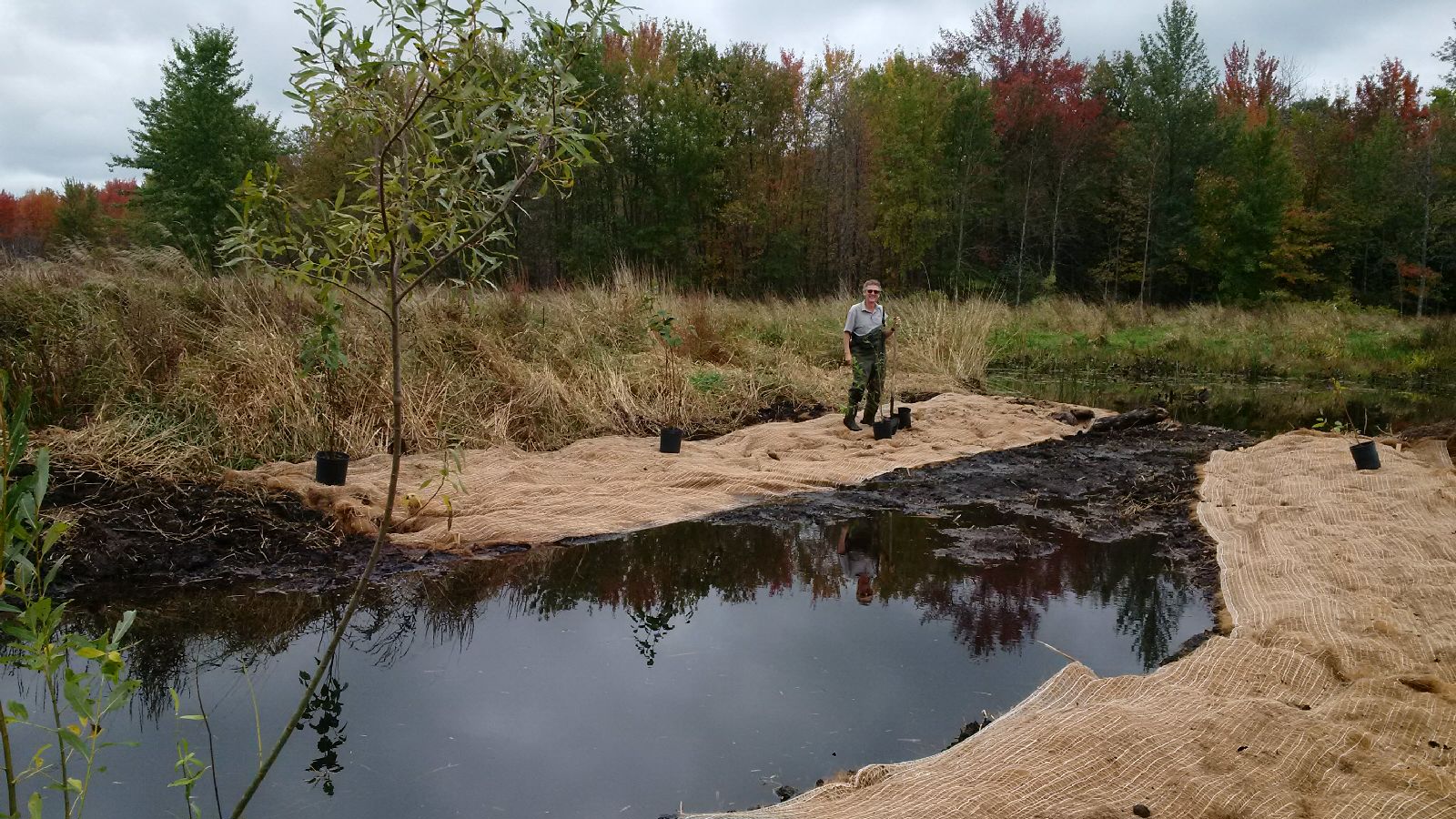
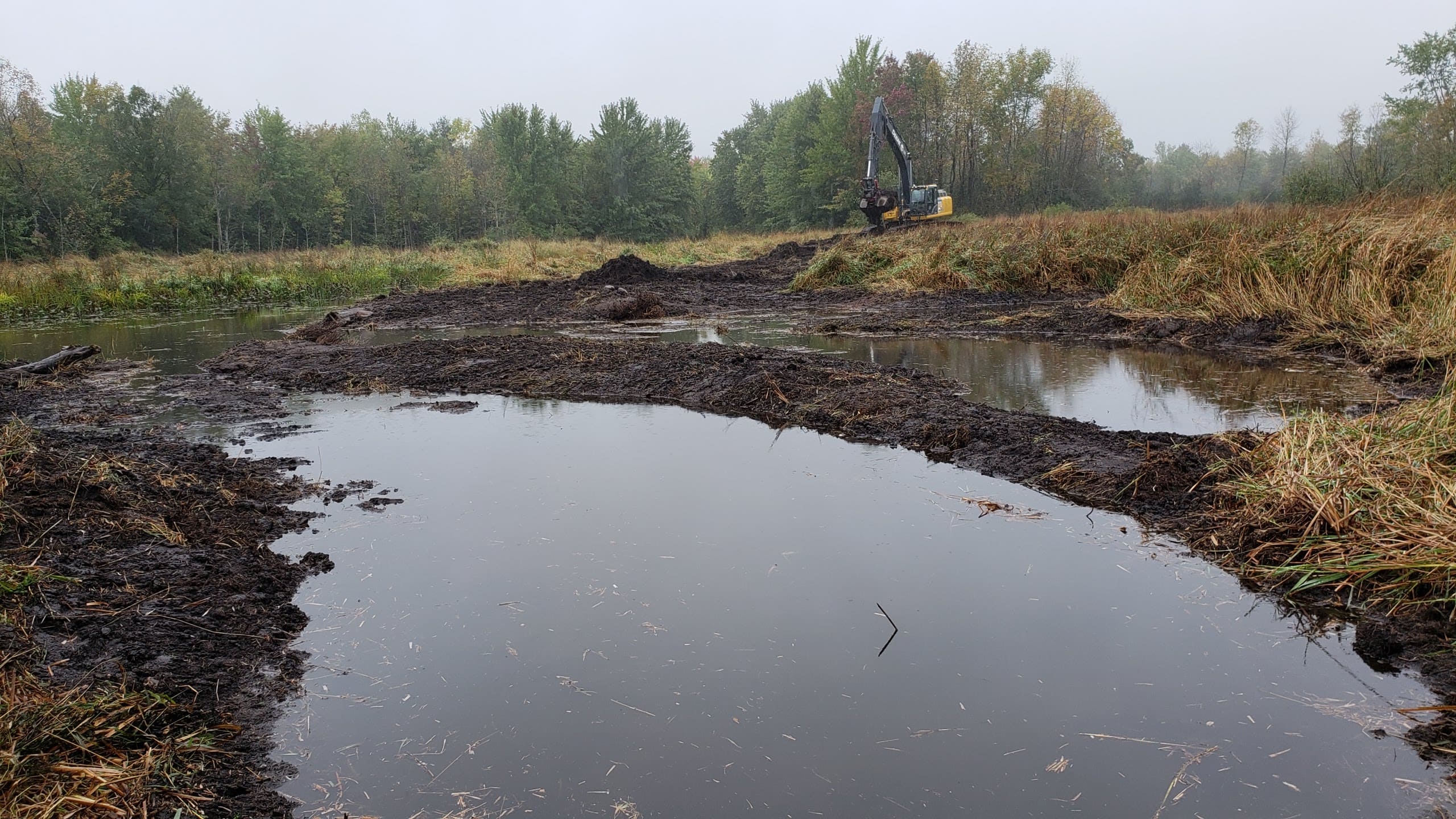
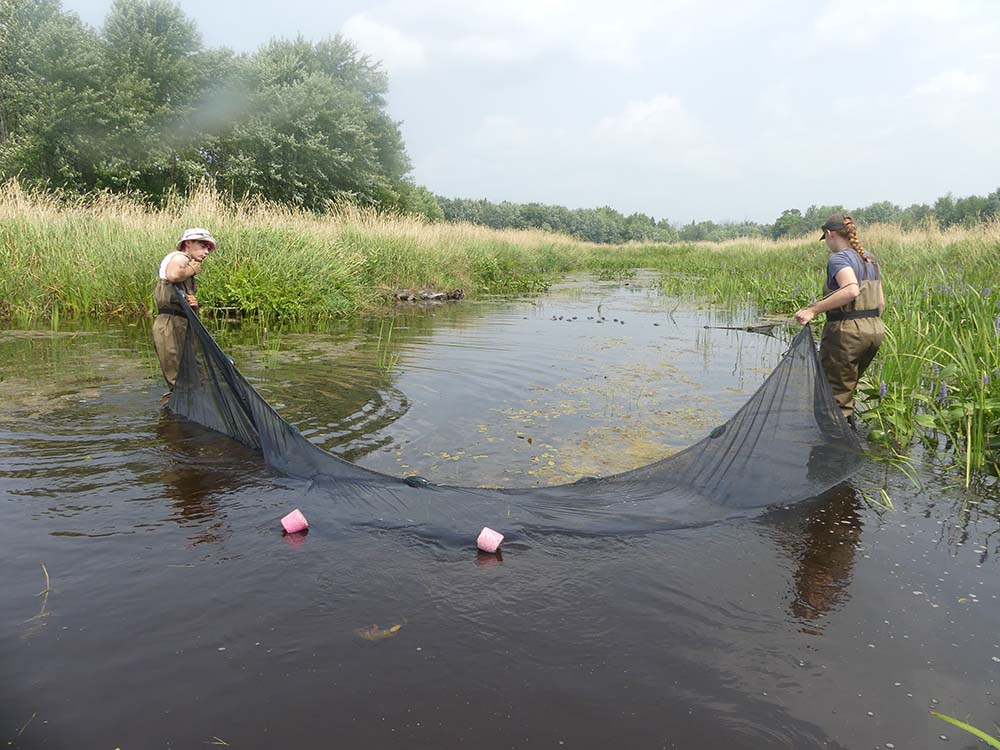
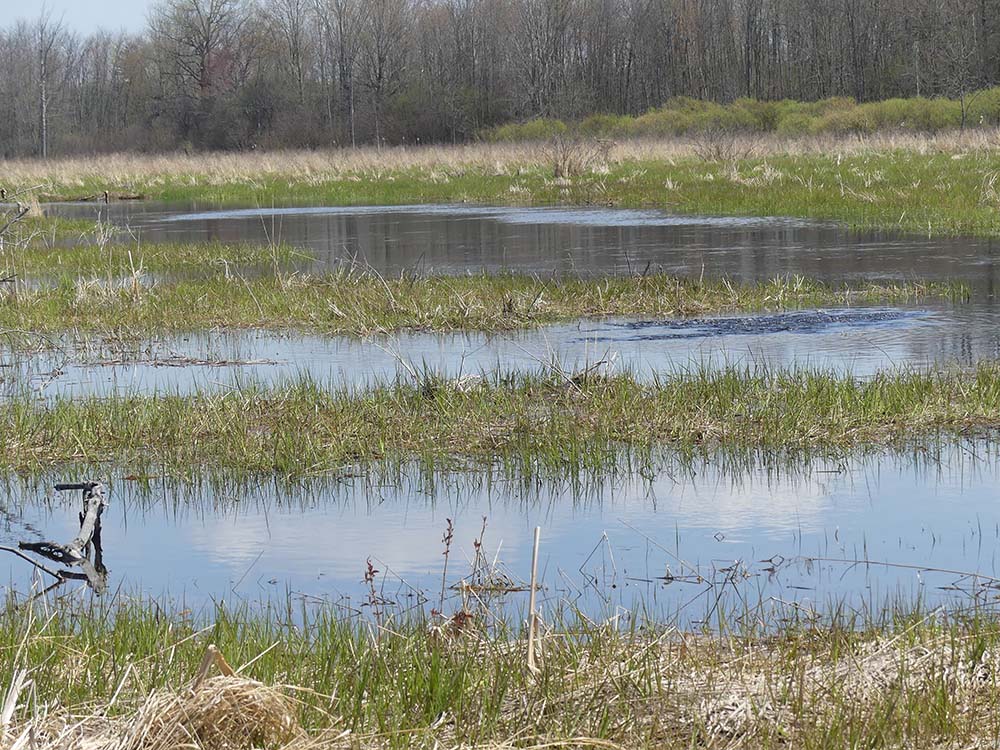
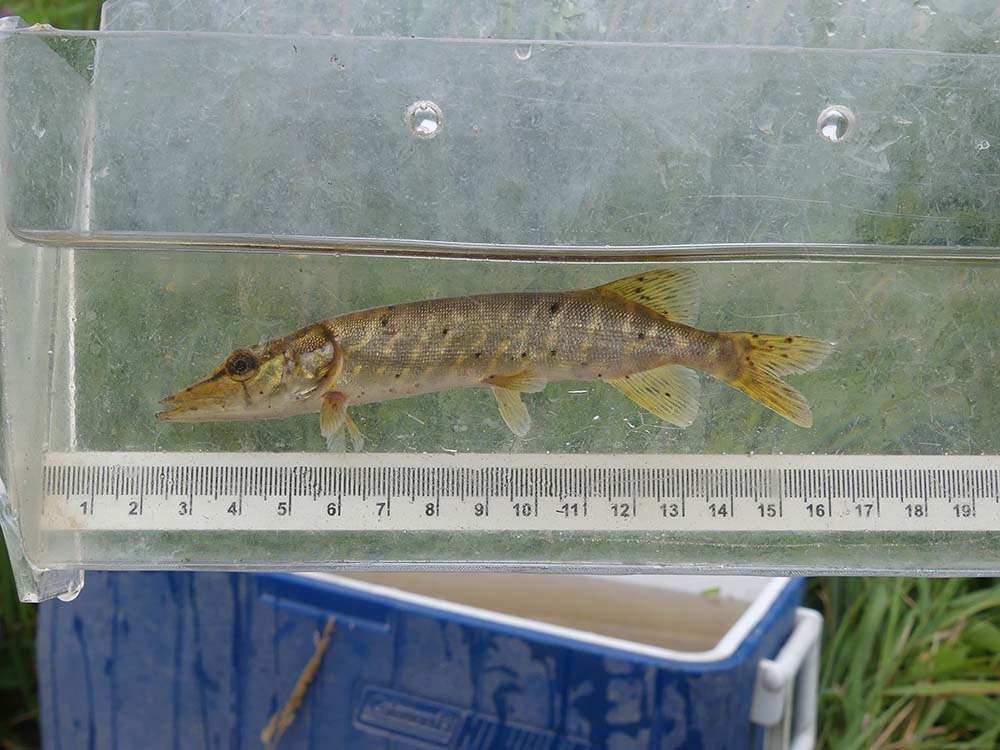
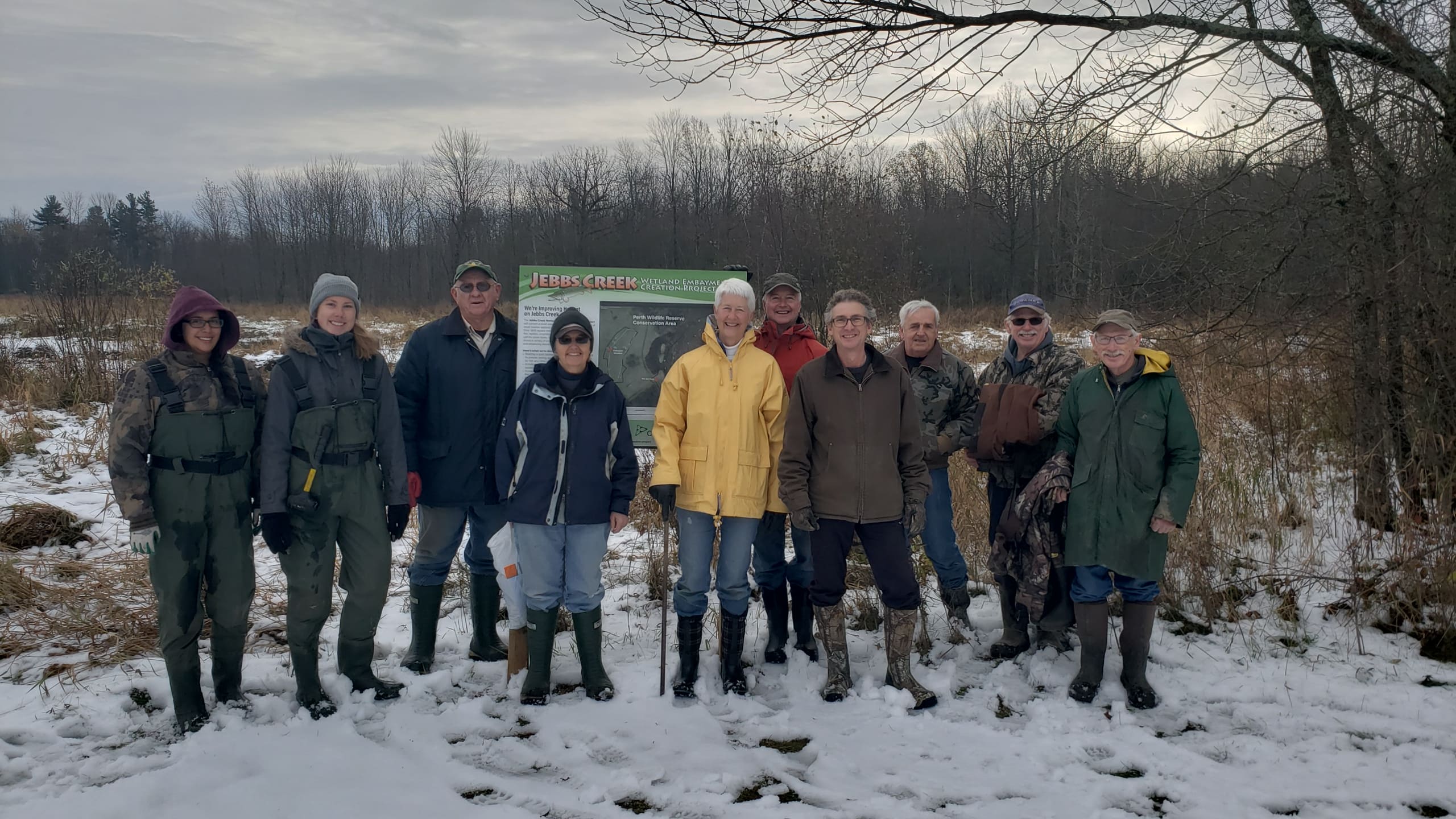
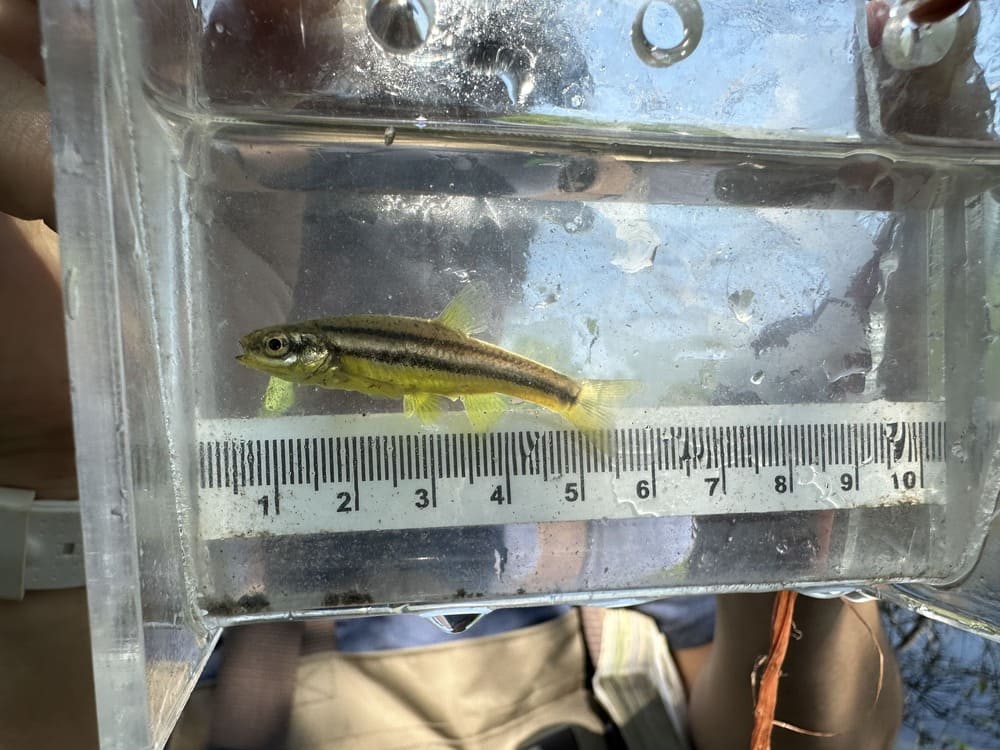
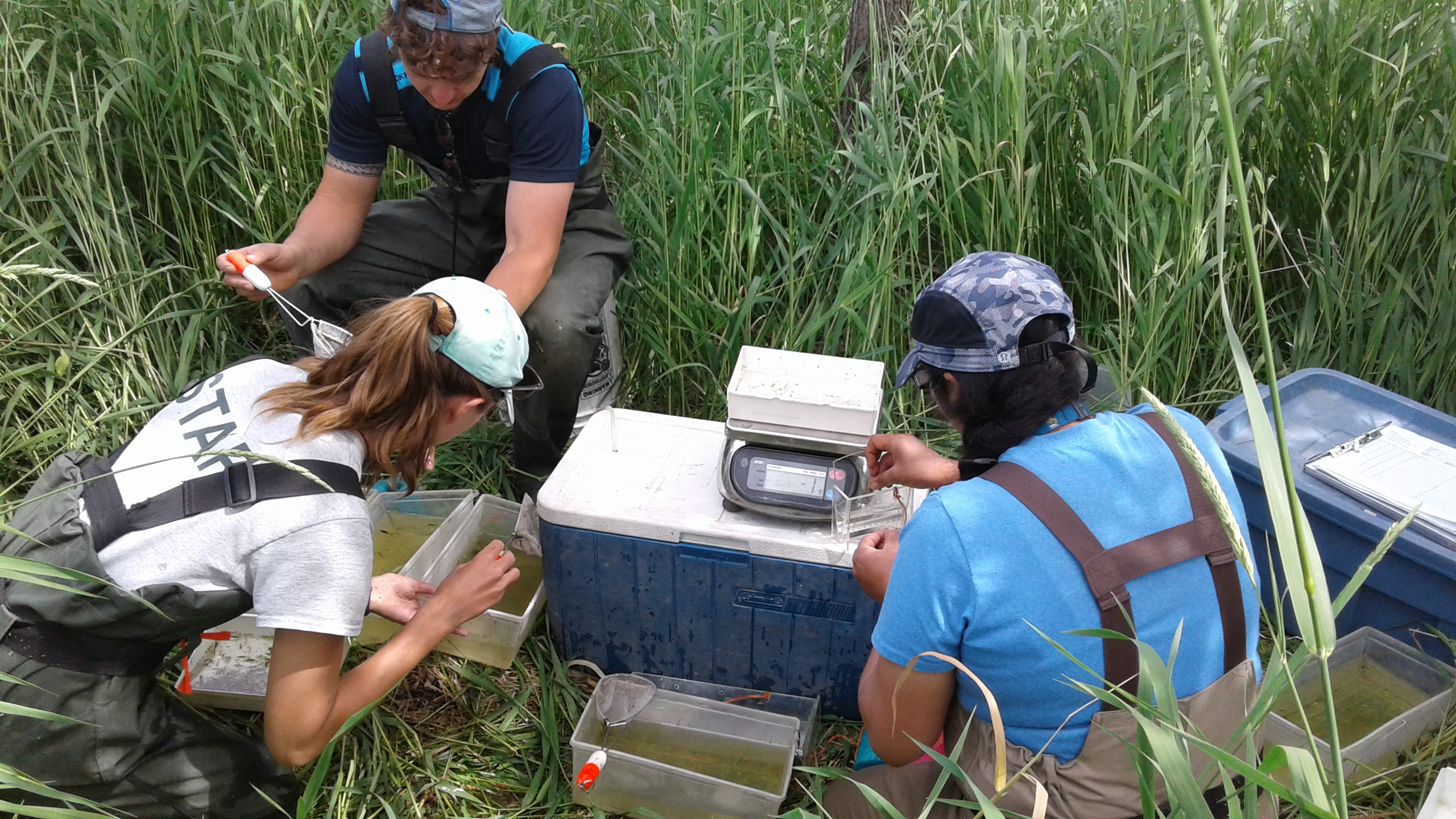
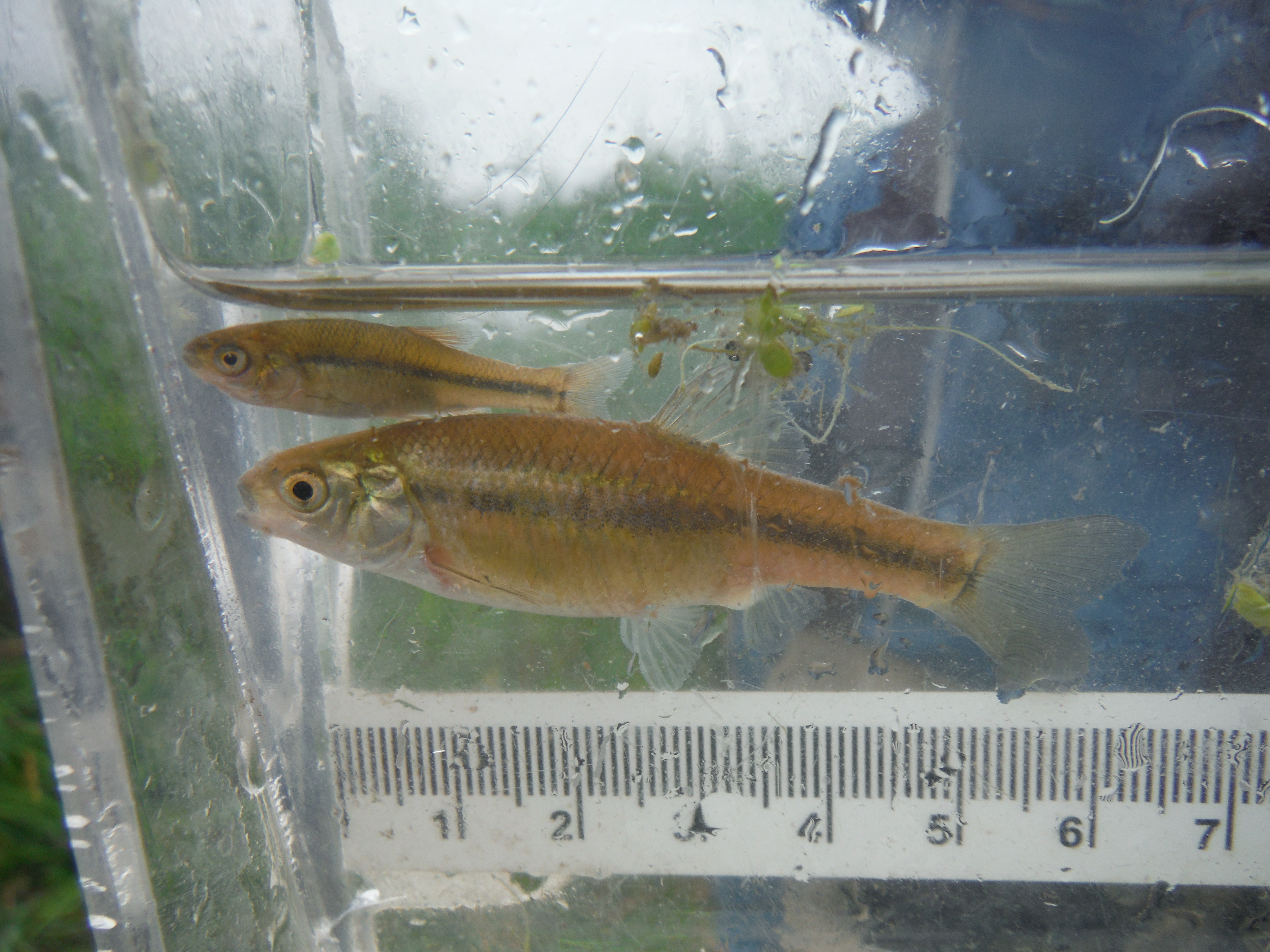
Located within the RVCA-owned Perth Wildlife Reserve, this riverine wetland project created 1,600m2 of new spawning and nursery habitat for the creek’s 20 fish species, creating wetland "fingers" ideal for spawning northern pike. Before construction, the area had become a monoculture with intermittent water flows. Pike would spawn there when the water was high, but fry would get trapped and die once water levels dropped. Today’s water levels are more reliable, and a recently published six-year monitoring report confirmed successful pike spawning and juvenile pike in the area. Key project partners included the Friends of the Tay River (FOTR), the Otty Lake Association (OLA) and the Ministry of Natural Resources.
More details:
Hutton Marsh Restoration Project
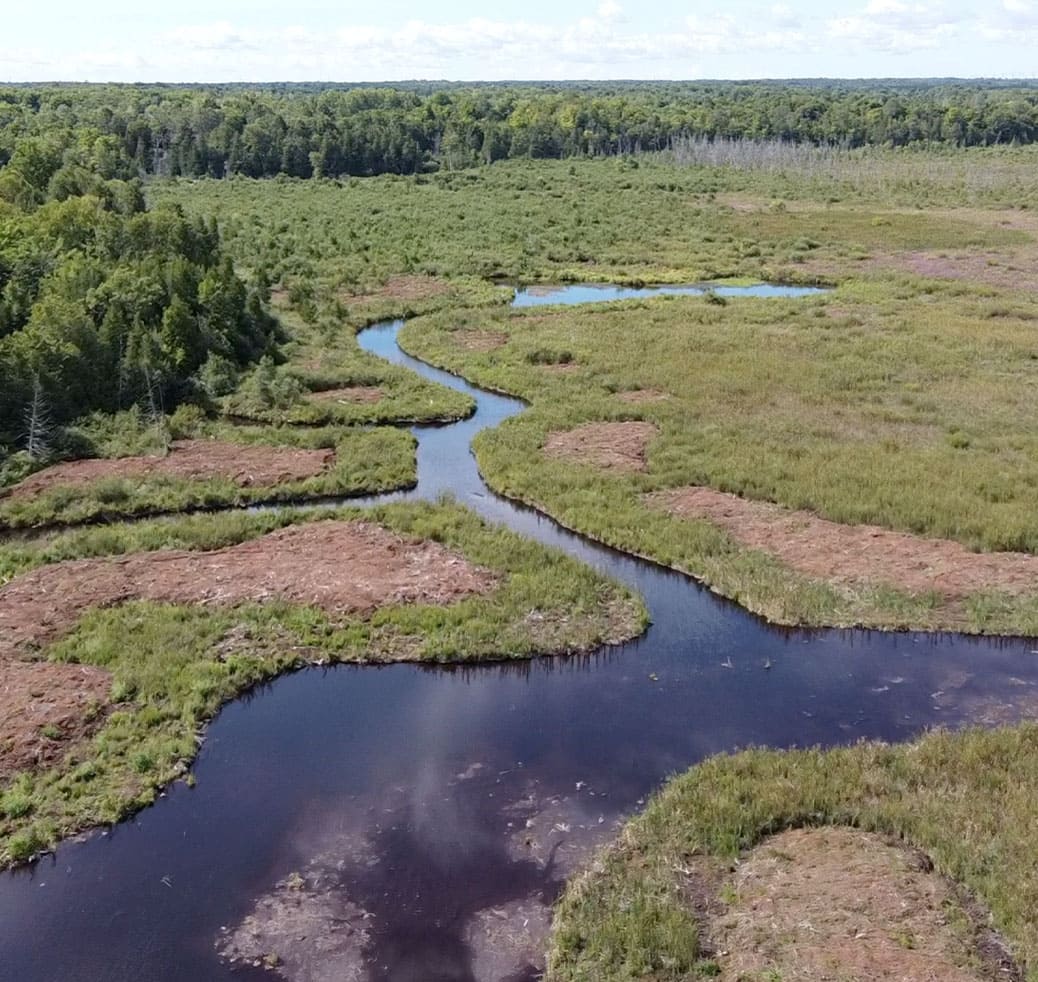
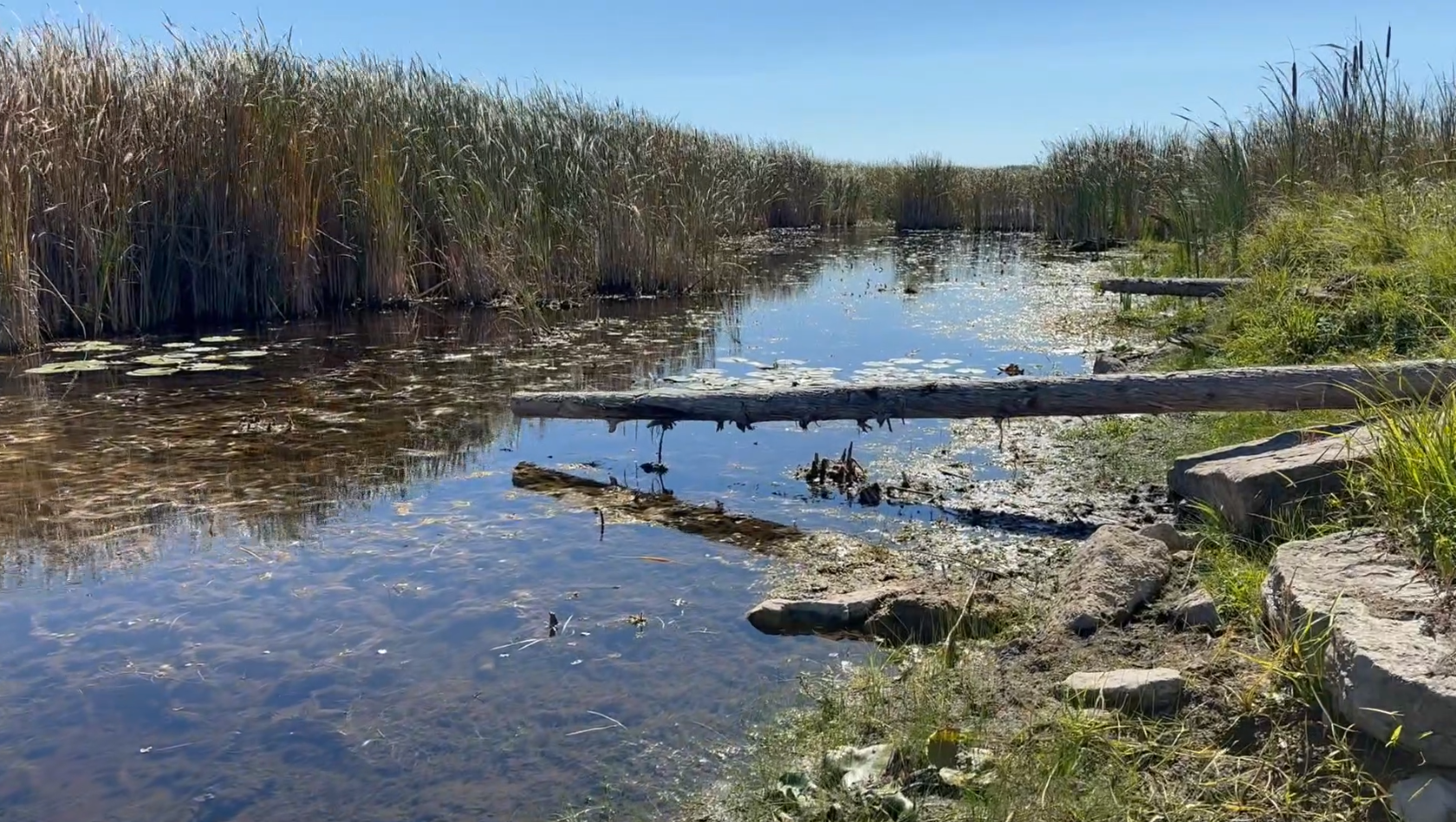
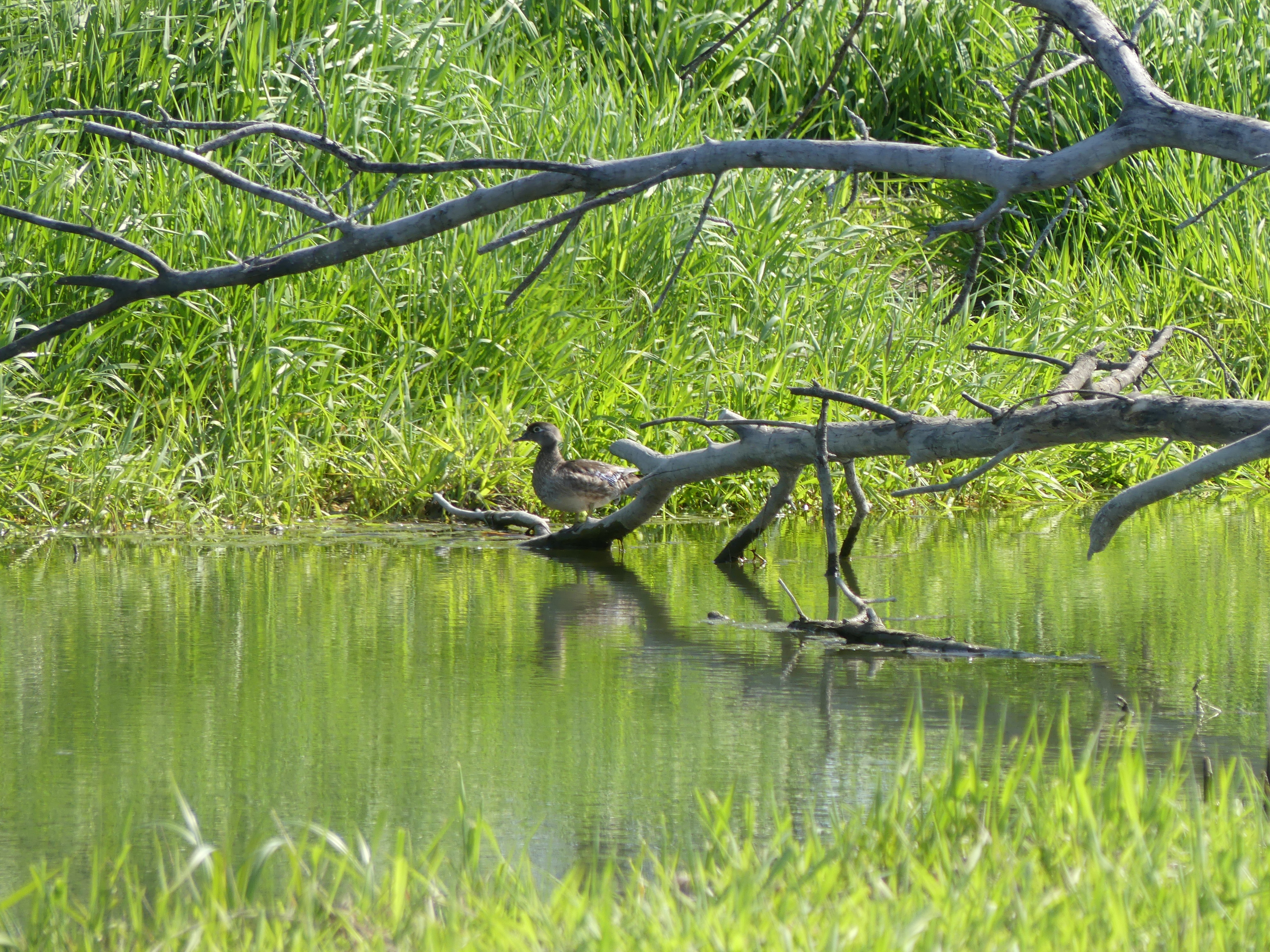
Since 2019, RVCA has partnered with Leeds-Grenville Stewardship Council, Ducks Unlimited, Wildlife Habitat Canada, the Rideau Valley Conservation Foundation and local landowners to restore the marsh at Motts Mills Conservation Area to a more natural state. The wetland had become choked and crowded, with almost no open water to support waterfowl or other open water species. Three phases of work have opened up several acres of ponds and more than a kilometre of open-water channels to encourage increased biodiversity in the marsh. In 2025, RVCA staff also added sandy nesting habitat for endangered Blandings turtles.
Stillwater Wetland Restoration Project
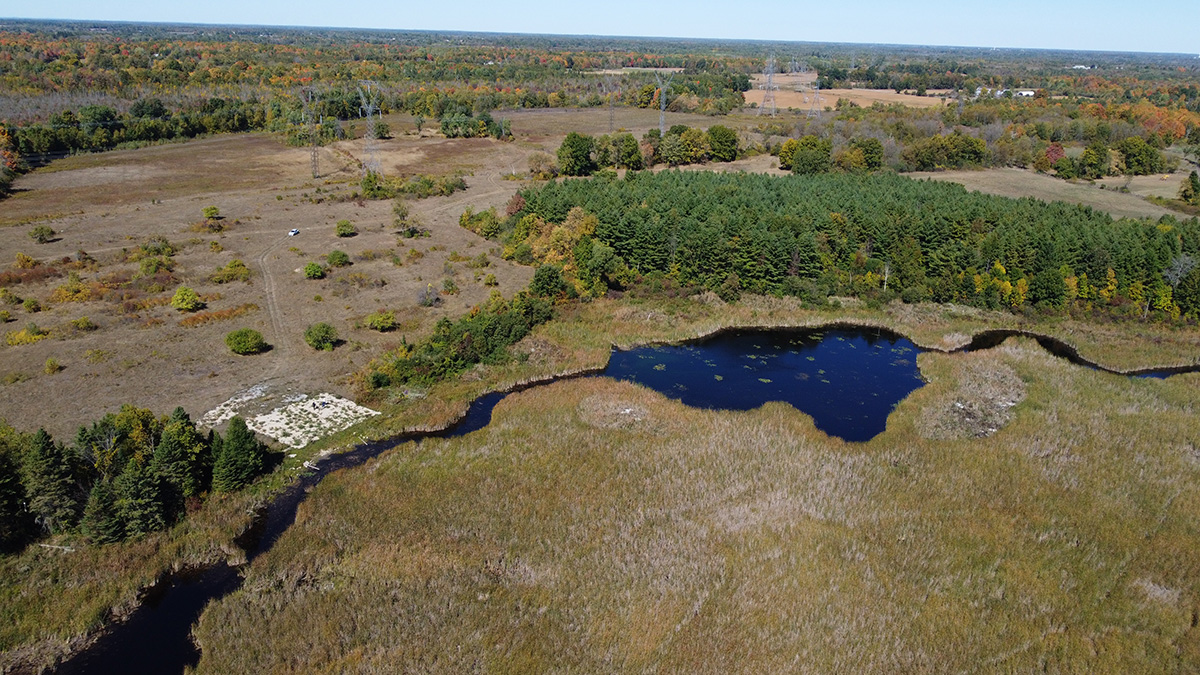
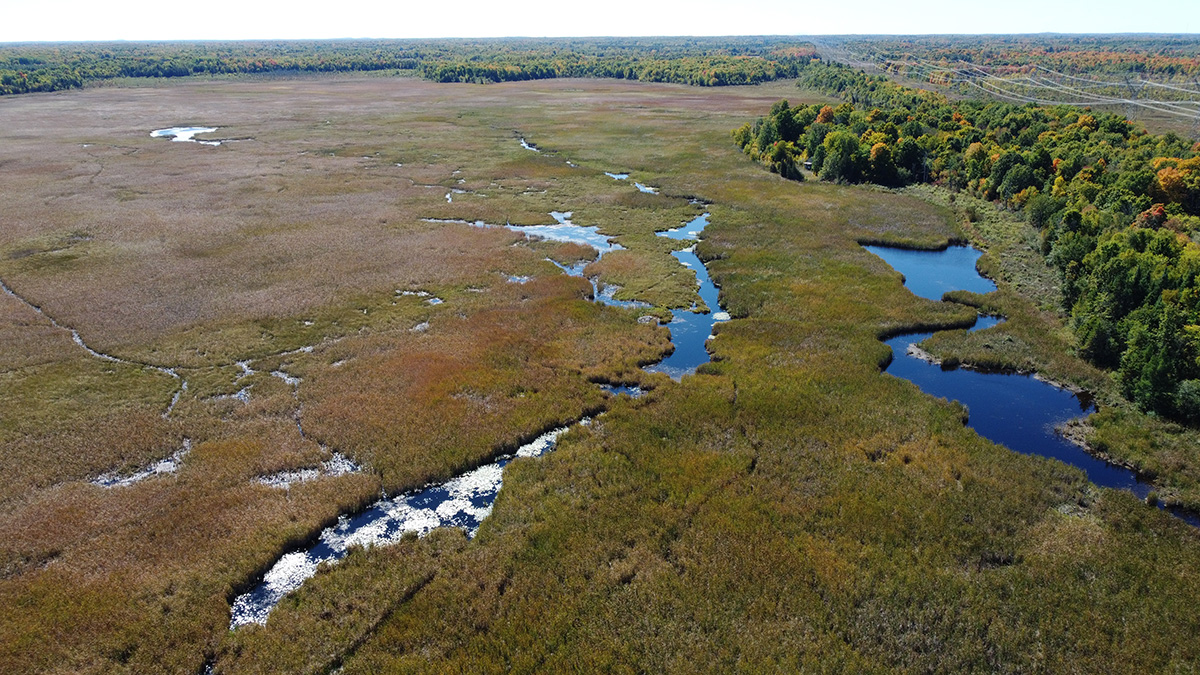
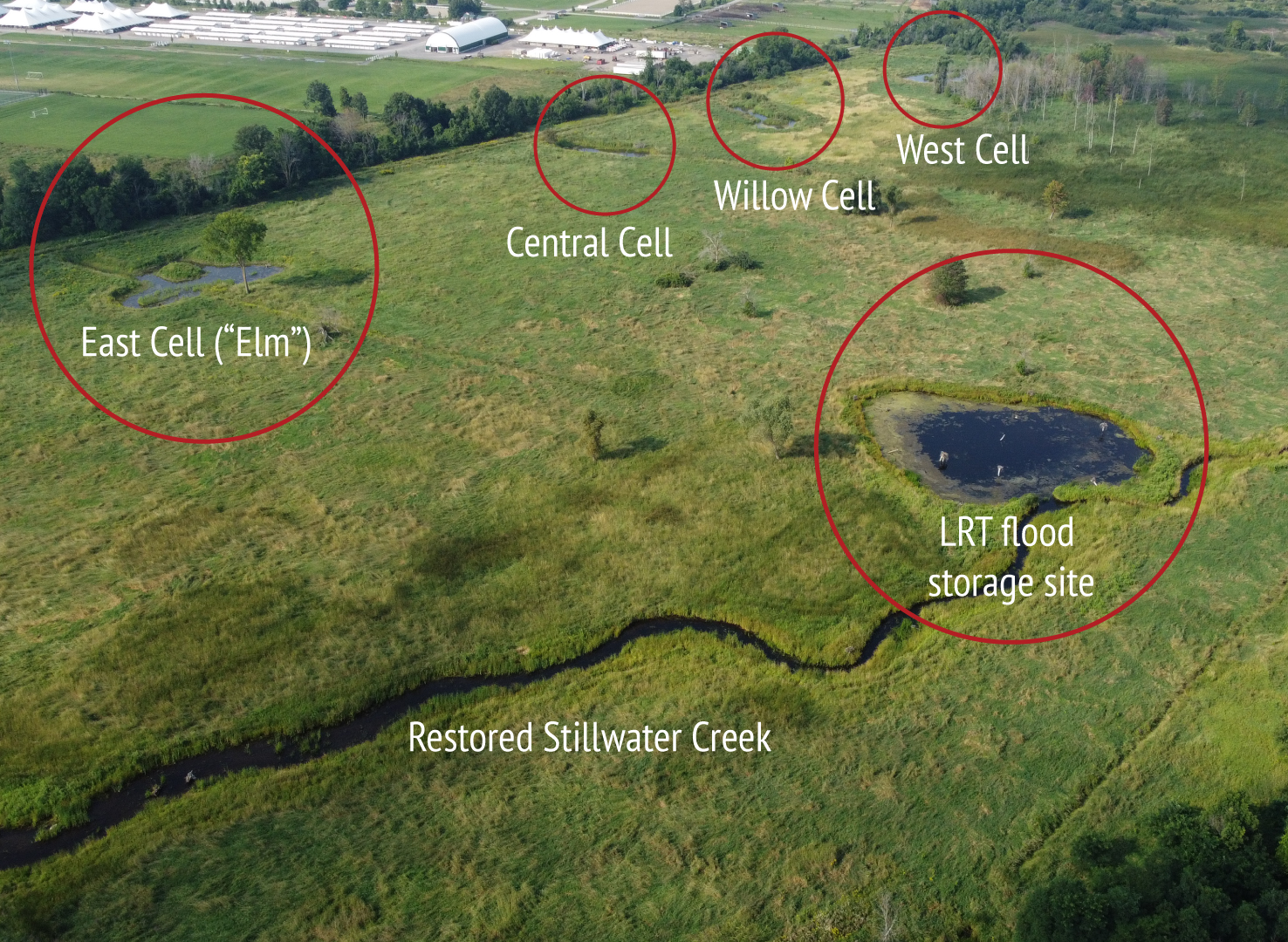
In 2018, the City of Ottawa’s Stage 2 LRT construction triggered a wetland restoration project at Stillwater Wetland along Moodie Drive. The City was required to offset downstream flood storage losses, and the RVCA and its partners saw an opportunity to rejuvenate a damaged wetland complex at the same time.
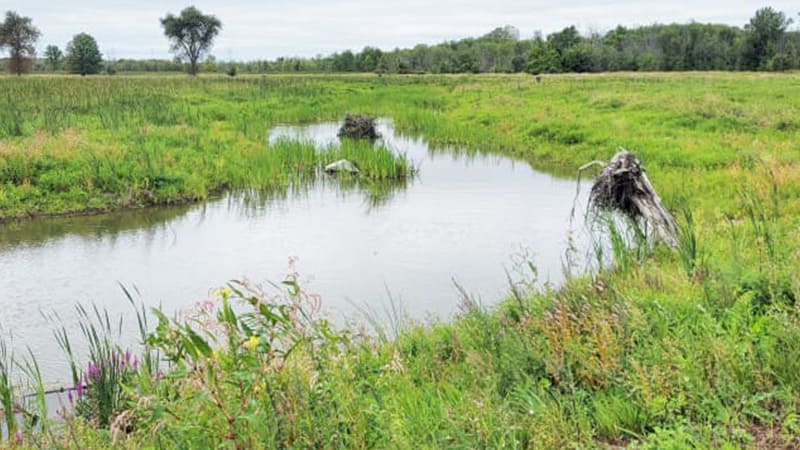
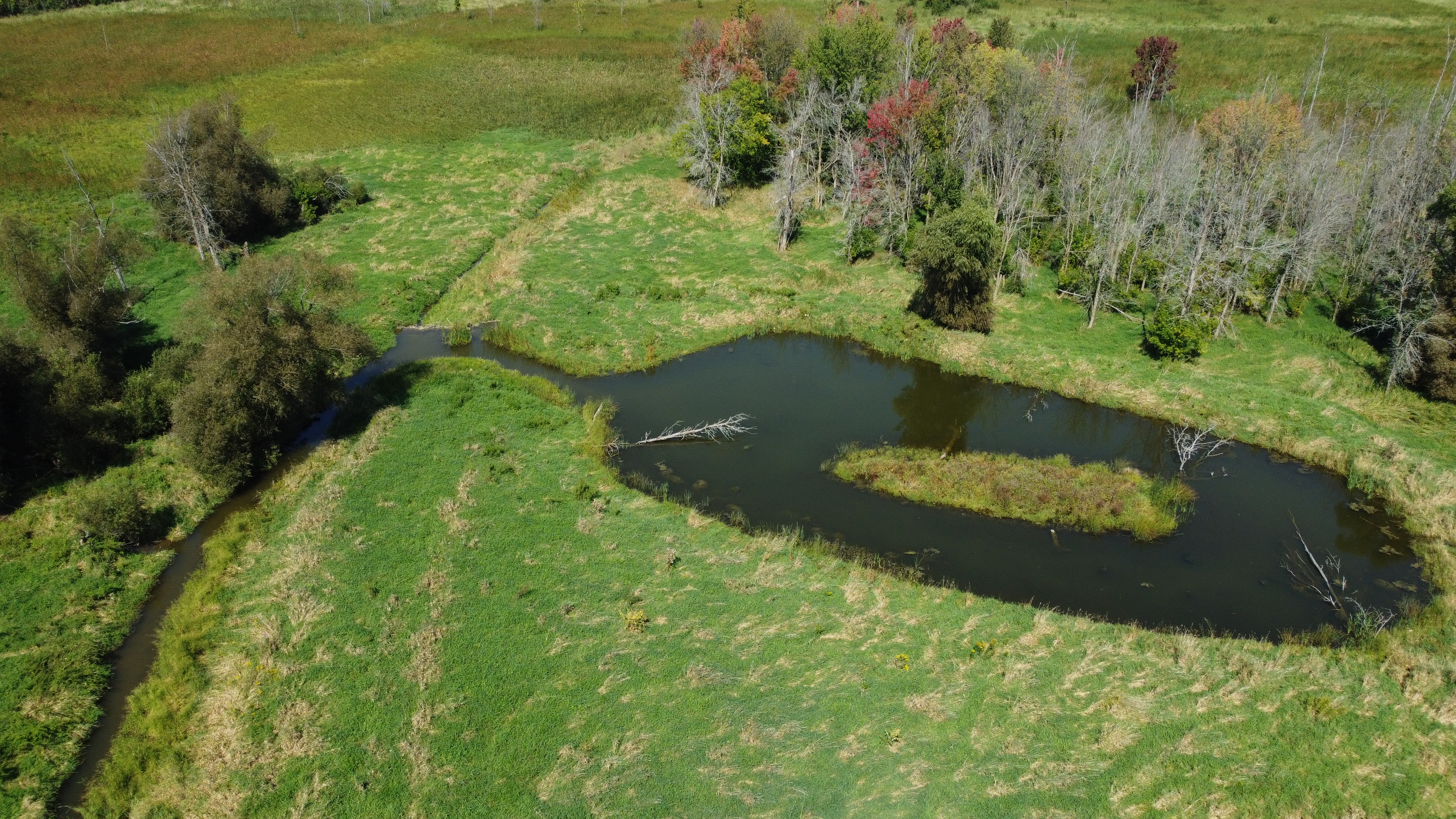
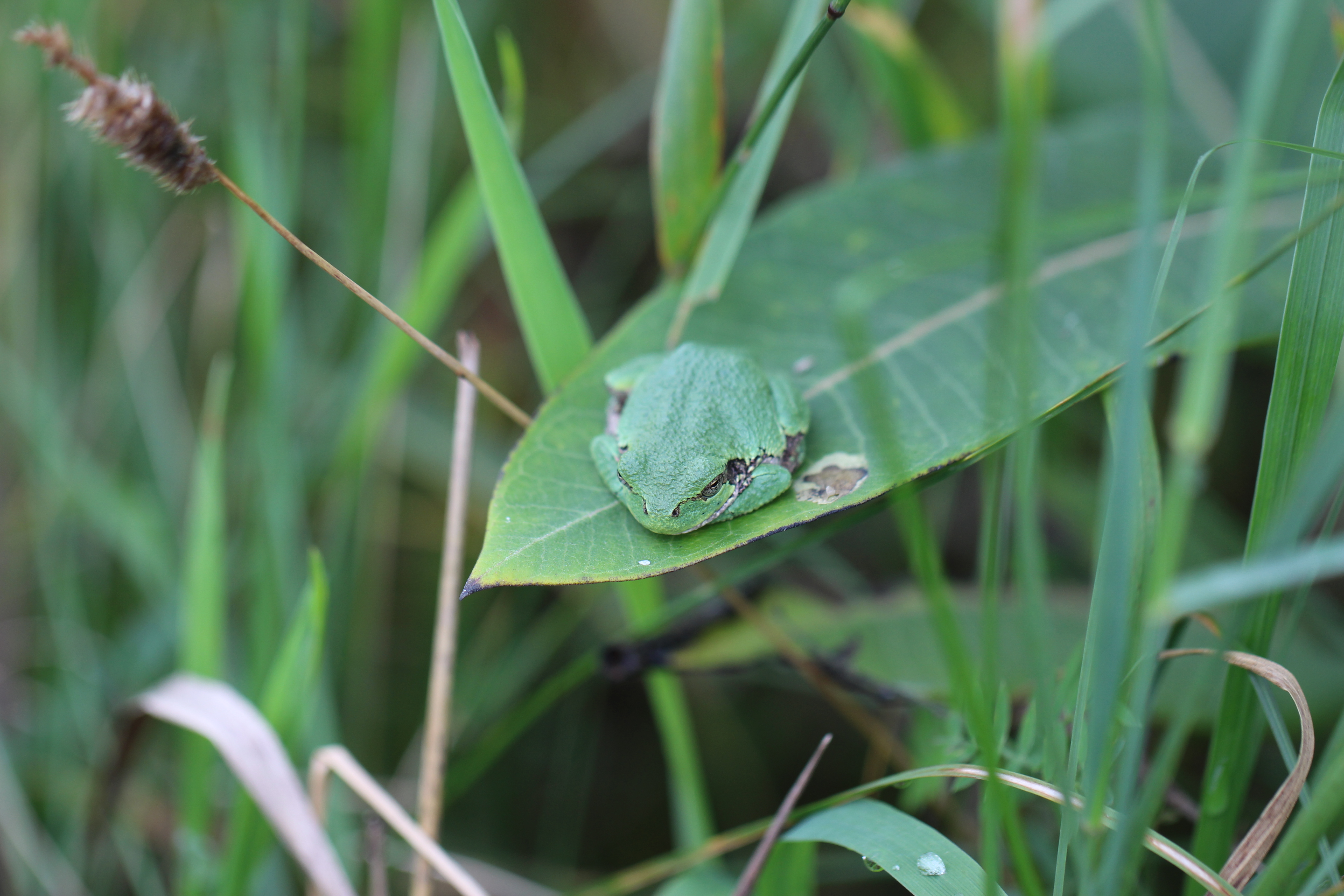
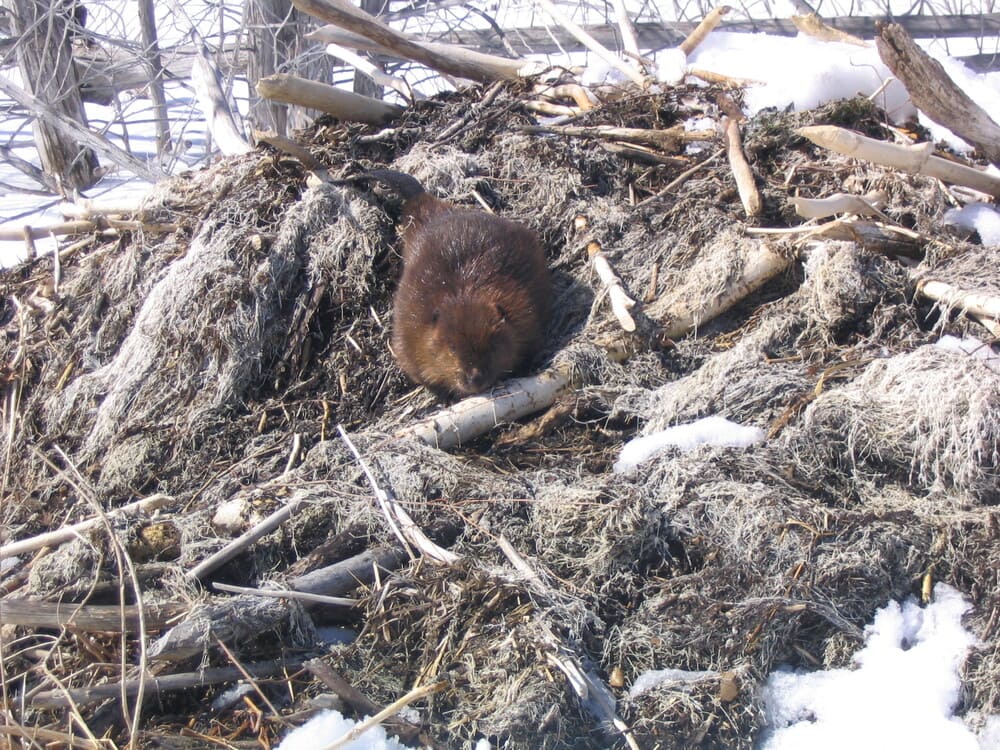
The multi-year project has since realigned a section of Stillwater Creek to a more natural meander, added 10,000 cubic metres of flood storage capacity in a newly created wetland, and added another four smaller wetland cells on the southern side of the property. Dozens of native bird, amphibian, turtle and plant species have returned to the site, including species at risk such as the western chorus frog, barn swallow and short-eared owl.
More details:
Black Rapids Wetland Restoration Project
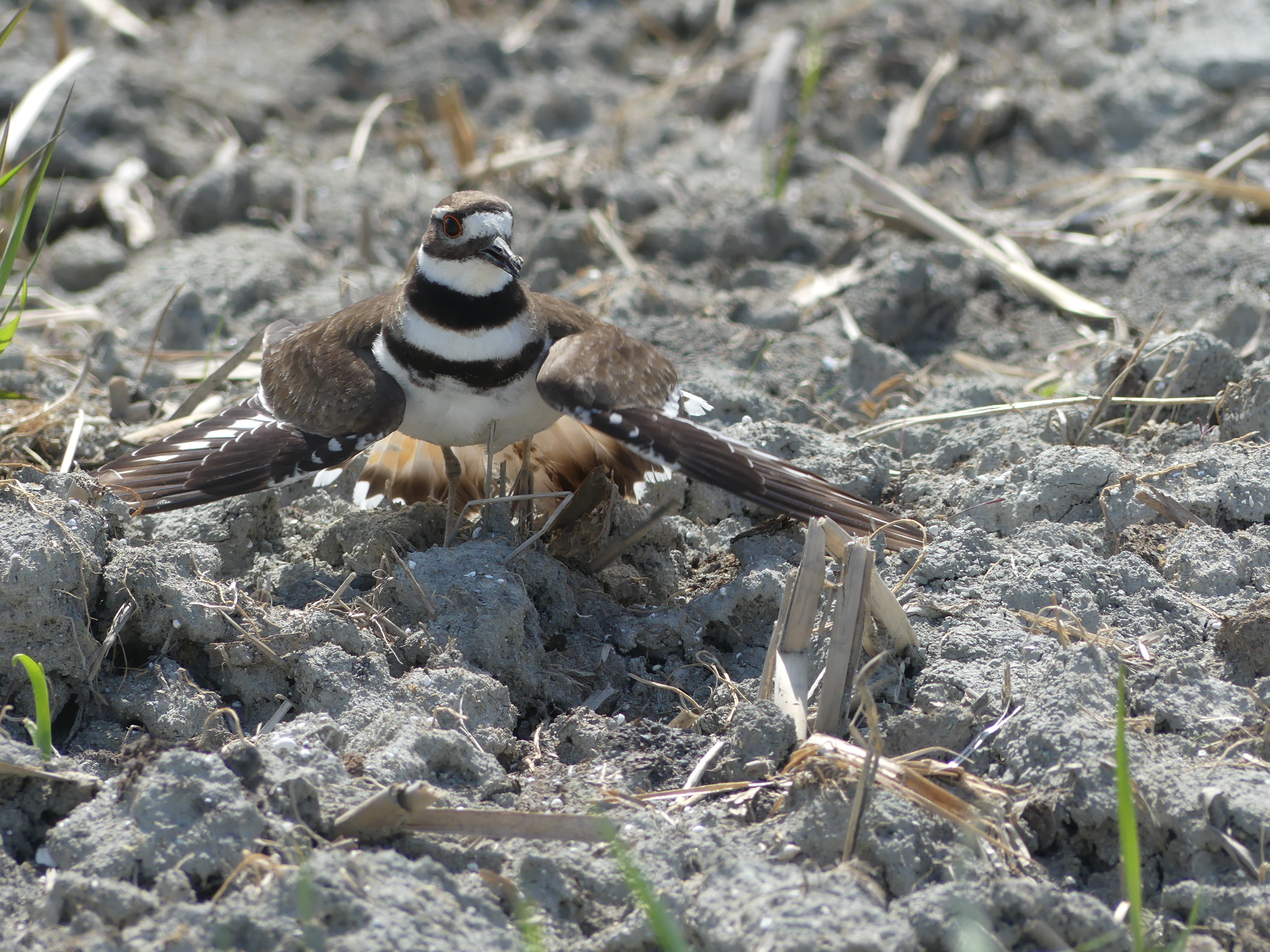
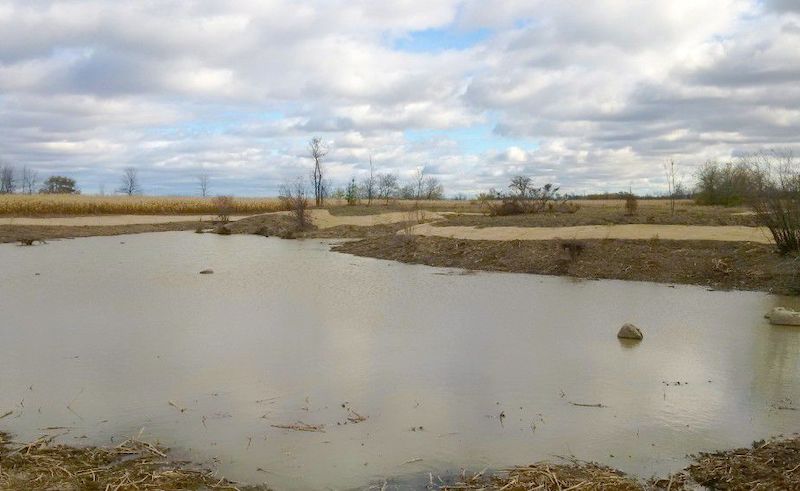
Completed in 2016, this project doubled the Black Creek wetland near Barrhaven to nearly 7,000 m2 and reconnected a local tributary to support improved amphibian breeding, fish habitat and bird foraging. With support from the National Capital Commission (NCC) and the Great Lakes Guardian Community Fund, the wetland now boasts a variety of side slopes, woody debris and native trees, shrubs and wetland vegetation.
More details:
Cambrian Road Pollinator Meadow
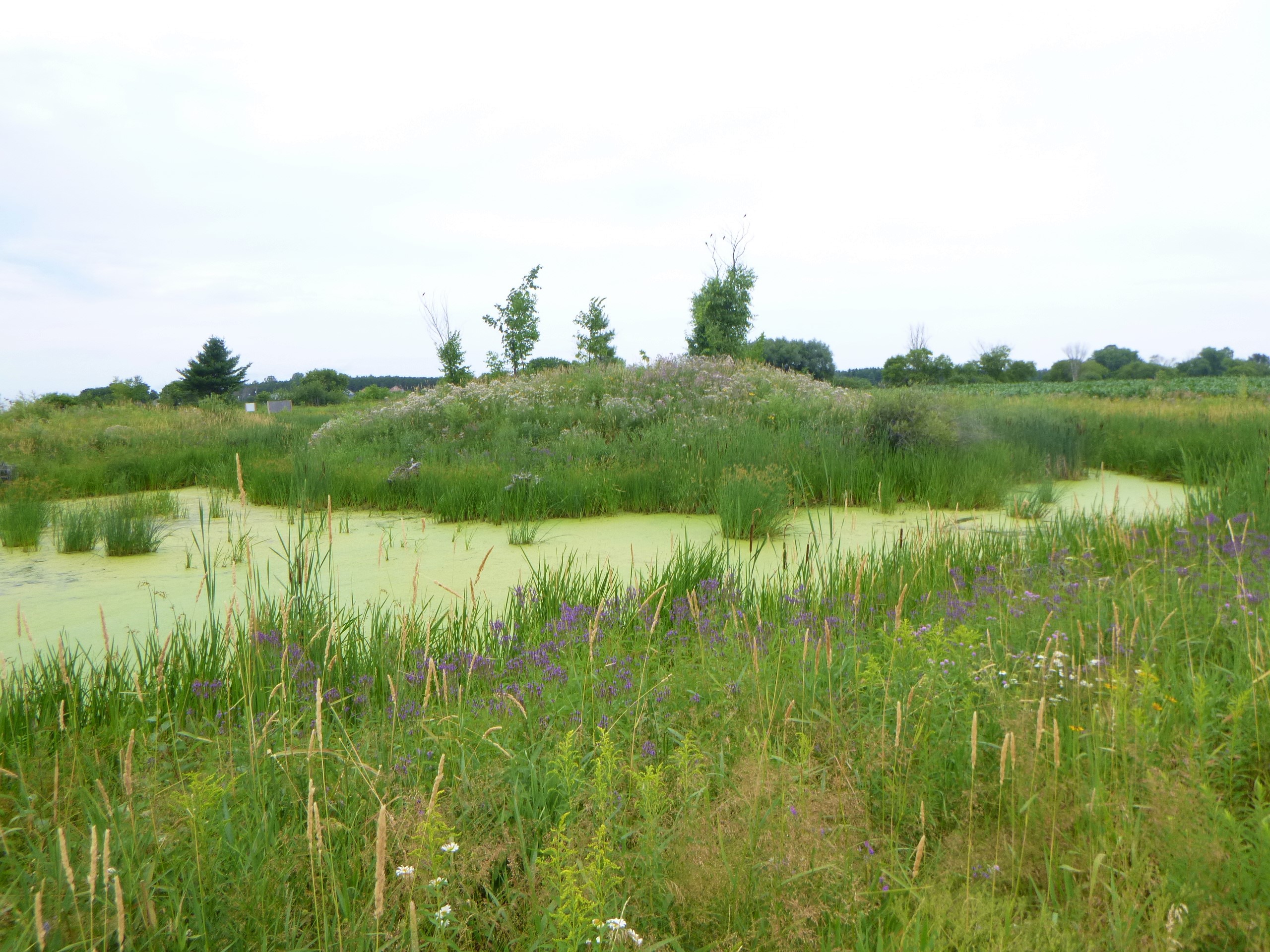
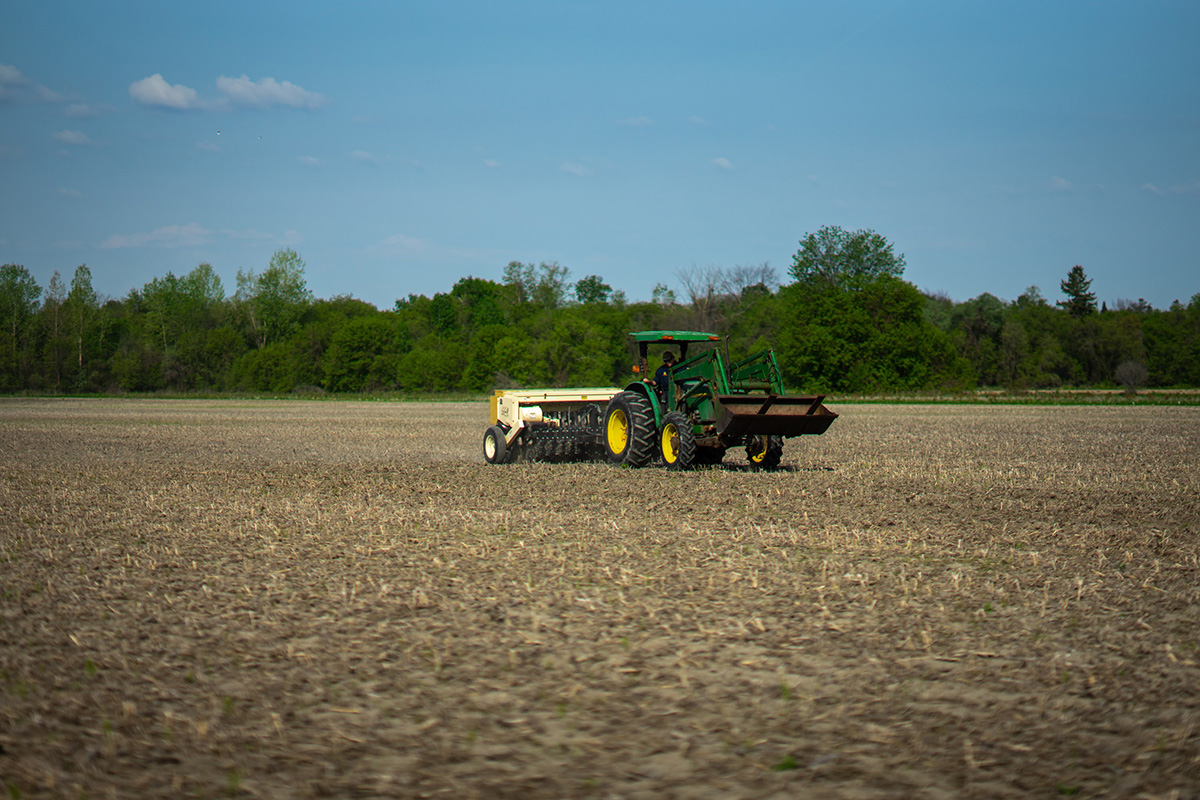
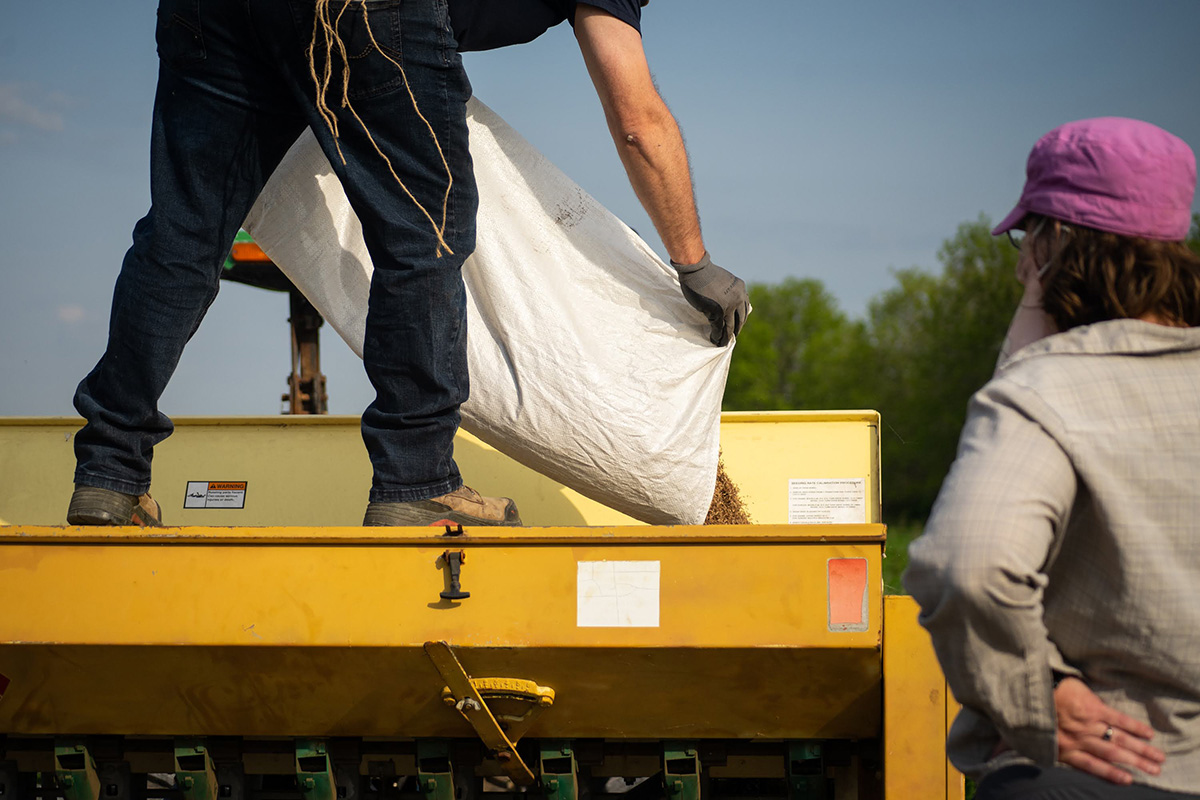
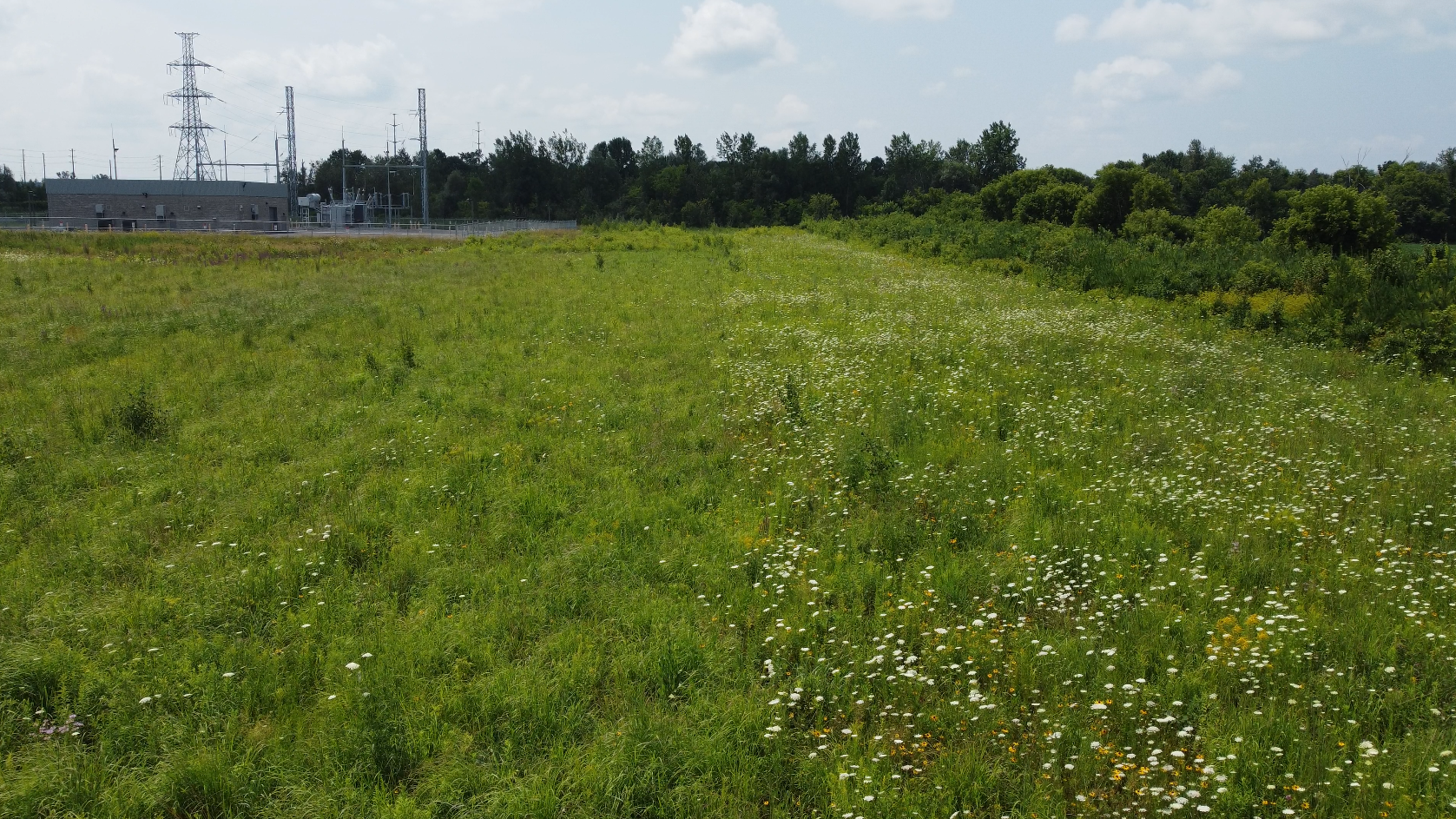
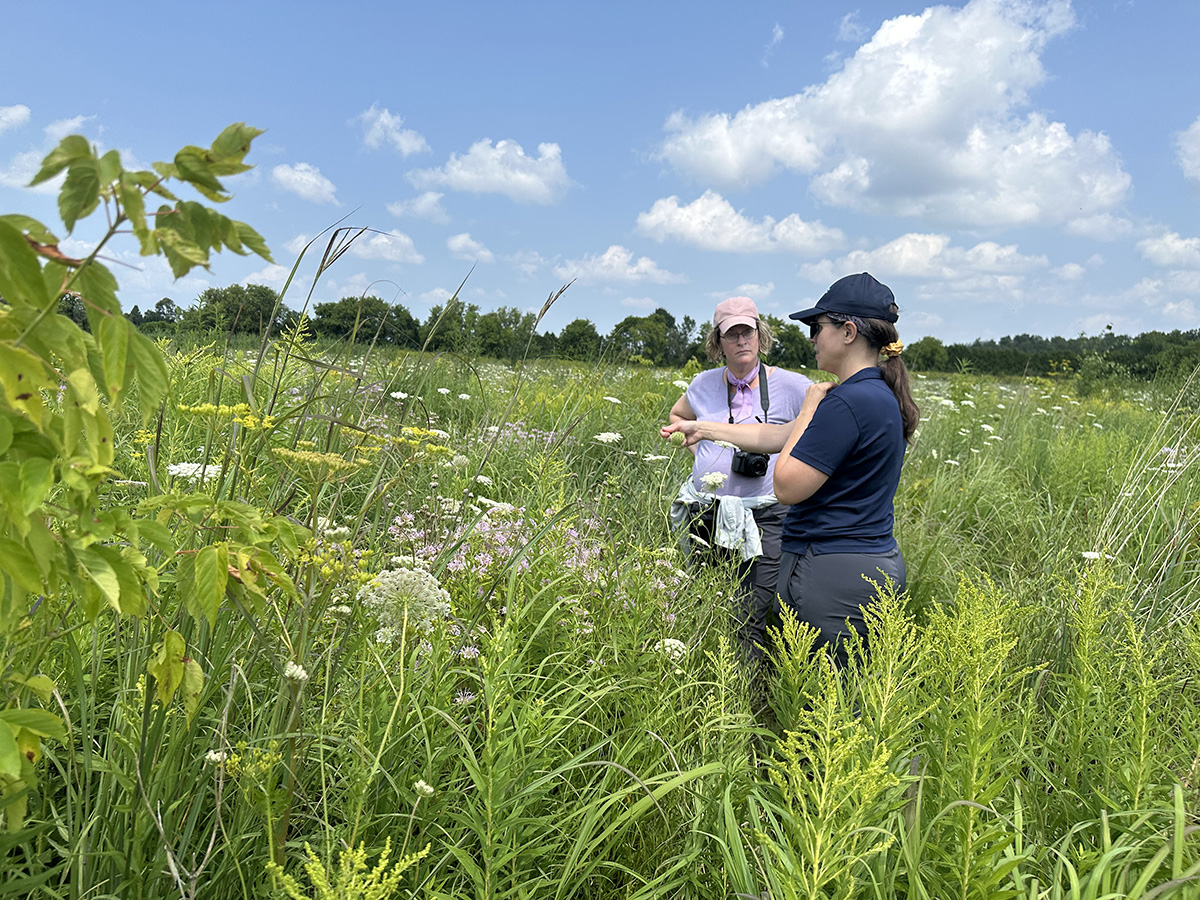
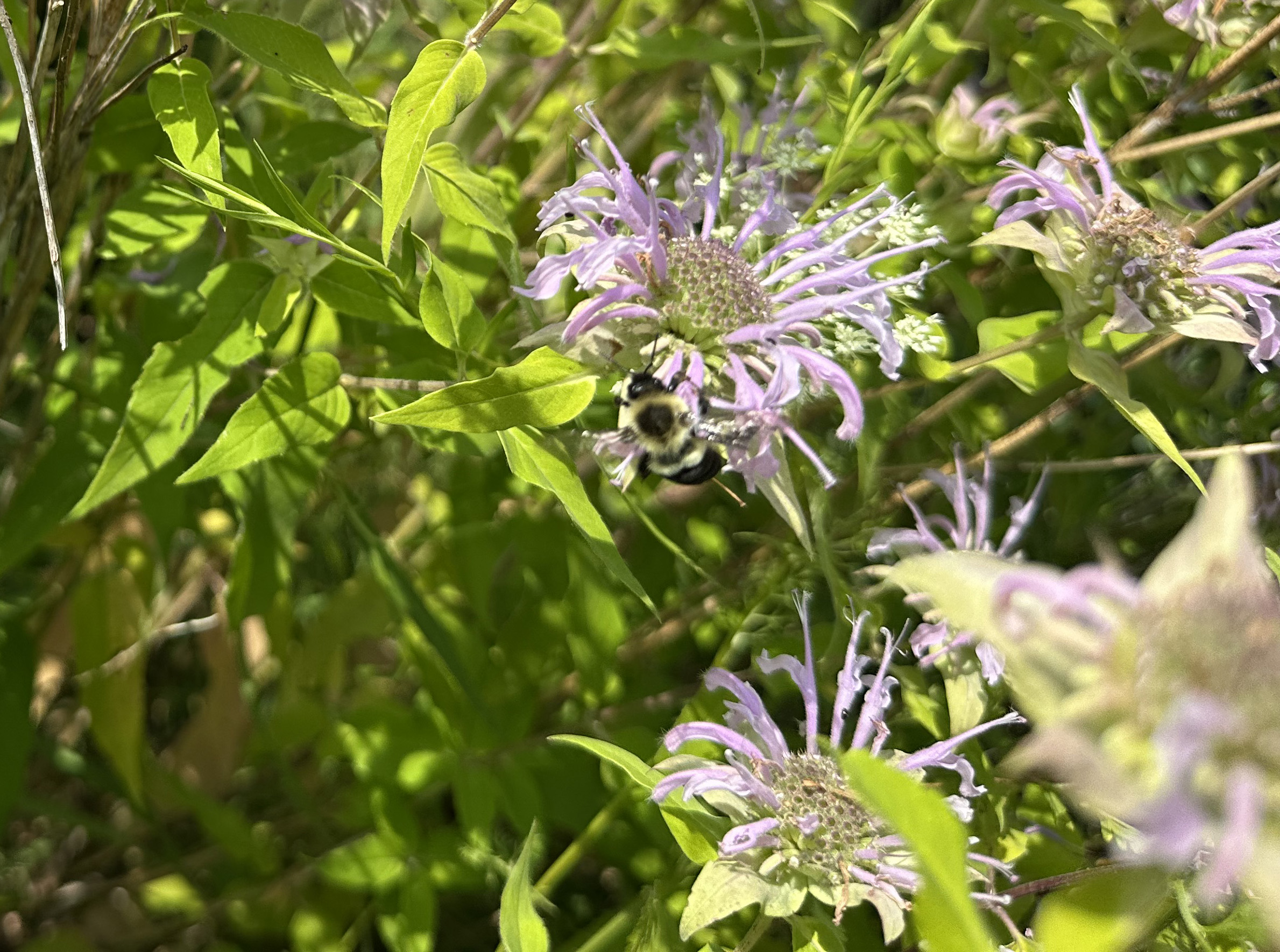
A 15-acre swath of Hydro Ottawa land in Barrhaven is now a buzzing metropolis of bees, birds and butterflies, thanks to RVCA and its partners planting one of the largest pollinator meadows in Eastern Ontario. This collaborative project grew from the construction of Hydro Ottawa's new municipal transformer station on Cambrian Road between Barrhaven and Manotick. The new station only required five of the property's 24 acres, so Hydro Ottawa partnered with RVCA, Rideau Valley Conservation Foundation, Canadian Wildlife Federation and City of Ottawa to create the new pollinator habitat on its surplus land. Seeding began in 2021 under RVCA's supervision and is now being maintained annually to support growth and control invasive species.
More details:
In-Water Fish Structures
RVCA partners with local groups like Lake Associations and Watersheds Canada to add structures to our lakes rivers that support fish habitat. These projects include brush bundles (Christmas Tree drops), spawning beds, and removal of migration obstruction barriers.
More details:
Bat Habitat Enhancements
In 2024, multiple bat species, including the Little Brown Bat, Hoary Bat, Silver-haired Bat, Eastern Red Bat, Northern Myotis, Big Brown Bat, and Tri-colored Bat, were documented on lands managed by the Rideau Valley Conservation Authority. These findings underscore the ecological significance of these properties and reinforce the need for ongoing monitoring and conservation efforts, particularly as many North American bat populations continue to face substantial pressures.
To support regional conservation objectives, Acoustic Recording Units (ARUs) have been deployed across 12 conservation land holdings. These devices will enable the identification of bat species utilizing these areas and provide critical data on species presence.
This information will inform targeted habitat enhancement initiatives. To date, one Super Rocket Roost has been installed at Baxter Conservation Area and another at the Perth Wildlife Reserve, with a third scheduled for installation at Chapman Mills Conservation Area in spring 2026. These structures are intended to expand available roosting habitat and support local bat populations.
More details:
Turtle Habitat Enhancements
The nesting enhancement was installed at the Marshbird monitoring station three. The existing soil conditions consisted of compacted silt, which was unsuitable for nesting. As a result, a sandy gravel mix was imported to serve as nest material. The area should be maintained by removing vegetation in spring or fall, outside of the turtle's active and hatchling window (May to October). The total area for this enhancement was 2500m2. The nesting site was monitored throughout the summer during the active window using trail cameras with cellular capabilities. If a turtle was observed using the nest enhancement, a nest protector would have been installed. The nest enhancement was installed mid-April 2025. RVCA installed four basking logs in each newly constructed pond. Permanent basking logs were installed with a total of 12 logs. Materials were harvested from the property using fallen trees with a diameter >10 cm. Basking logs were installed at different levels to allow for availability during variable water level fluctuations and anchored to the shoreline using cinderblocks with a lag bolt and chain to reduce shifting from weather events. They were installed in early April 2025.
Stillwater Wetland Restoration Project
RVCA supports pollinators by using native plants and planting native gardens on our lands. Native flowering plants are available to landowners to enhance their own properties through the Shoreline Naturalization Program. RVCA also supports the volunteer lead Butterfly Garden at Perth Wildlife Reserve. Contact us to learn how to get involved!
More details:
Bioengineering at Andrew Haydon Park/Graham Creek
In 2012-2013 RVCA partnered with XXXX to restore an eroding shoreline of Graham Creek in Ottawa’s Andrew Haydon Park. More than ### volunteers helped build and install a fascines, a brush mattress, and live stakes made from live willow and dogwood cuttings and plant more than ## native trees, shrubs and wildflowers. As the plant roots took hold they stabilizes the bank reducing the erosion, preventing excessive sediment from entering the creeks, and providing habitat. While this project is older, it remains an excellent example of using natural materials to prevent erosion.
More details:
Chapman Mills Demonstration Site
RVCA’s Chapman Mills Conservation Area in Barrhaven is home to several examples of erosion control methods including coir logs, vegetated rip rap and buffer strips.
More details:
Baxter Conservation Area Rain Garden
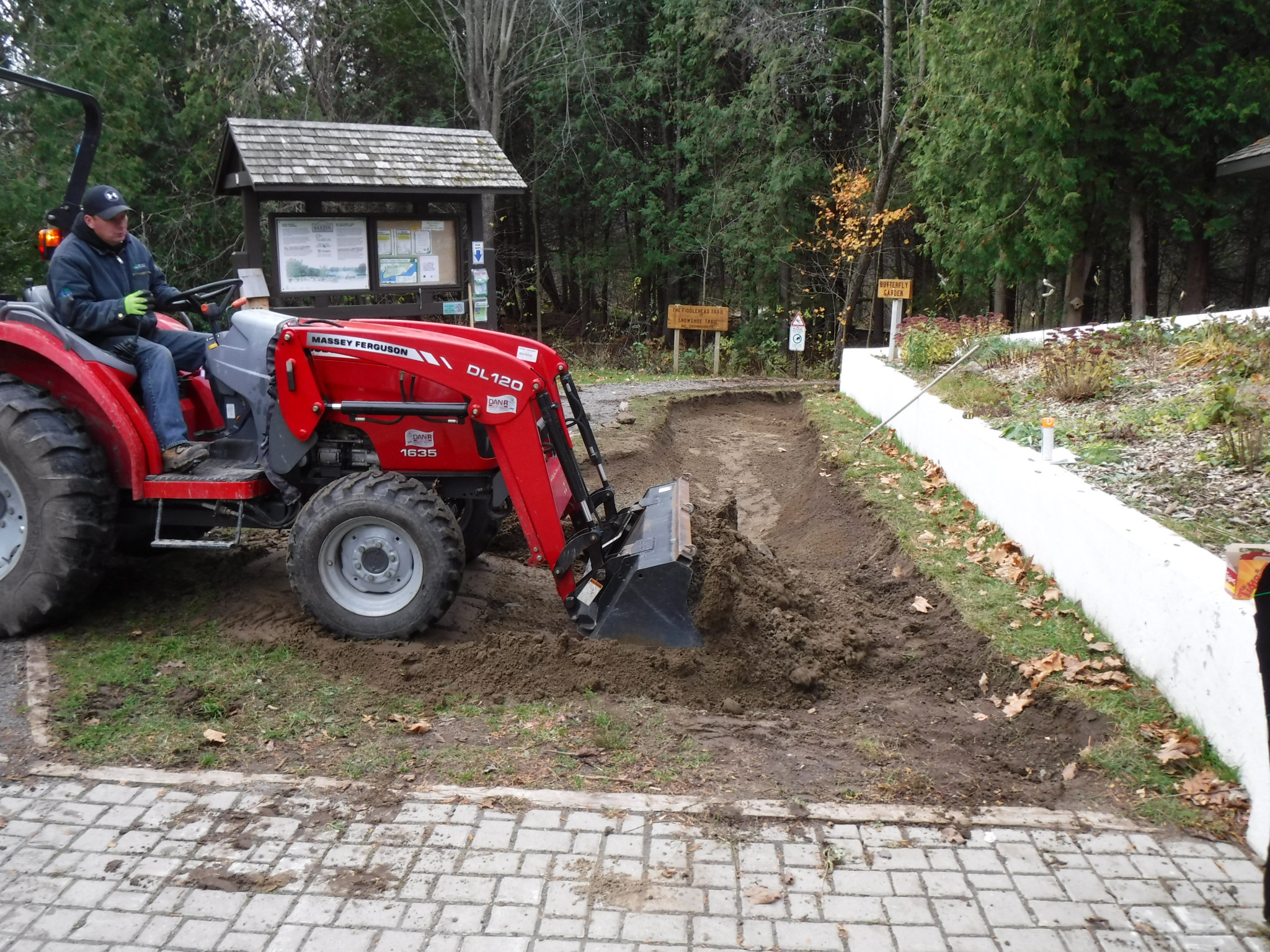
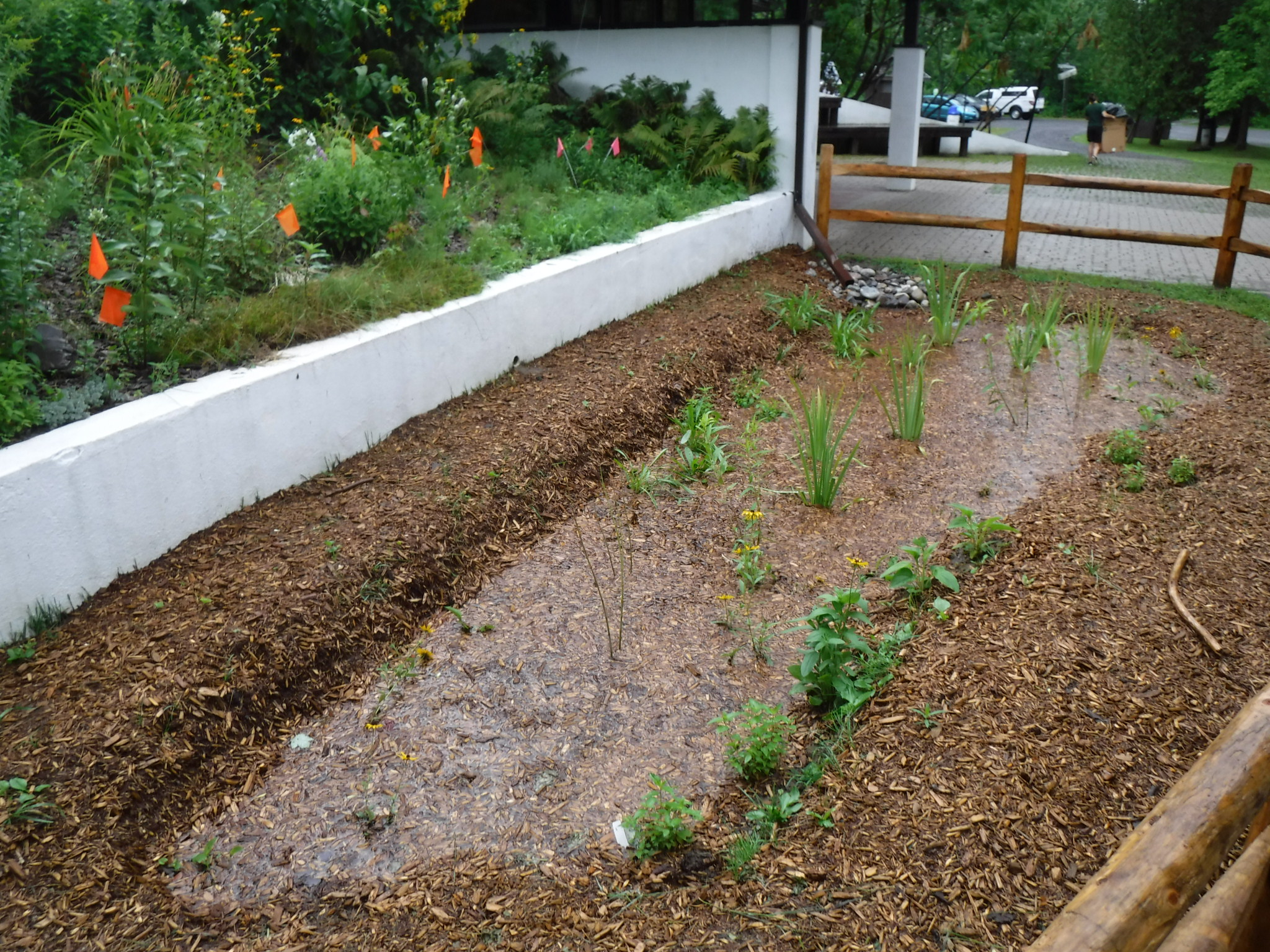
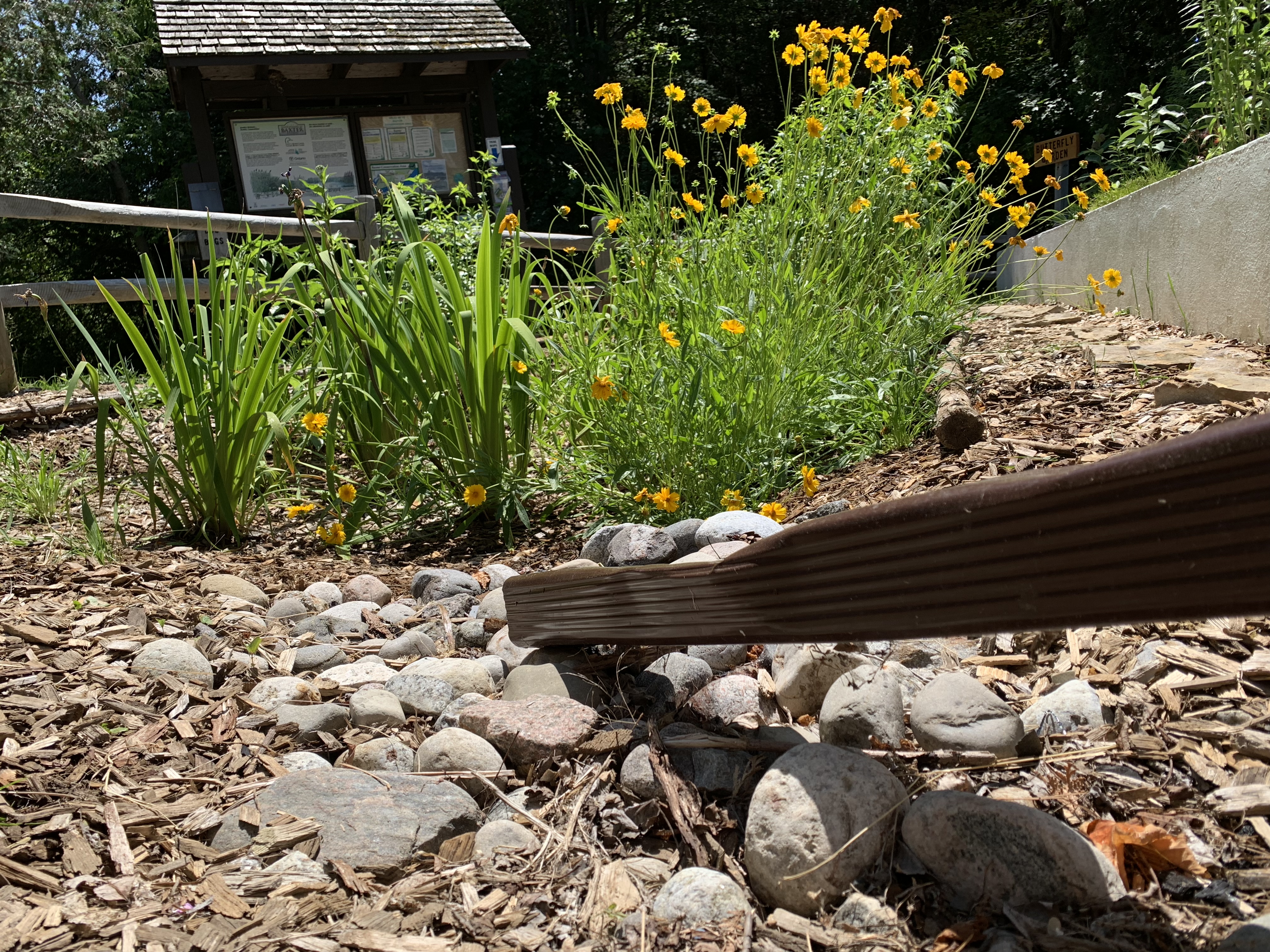
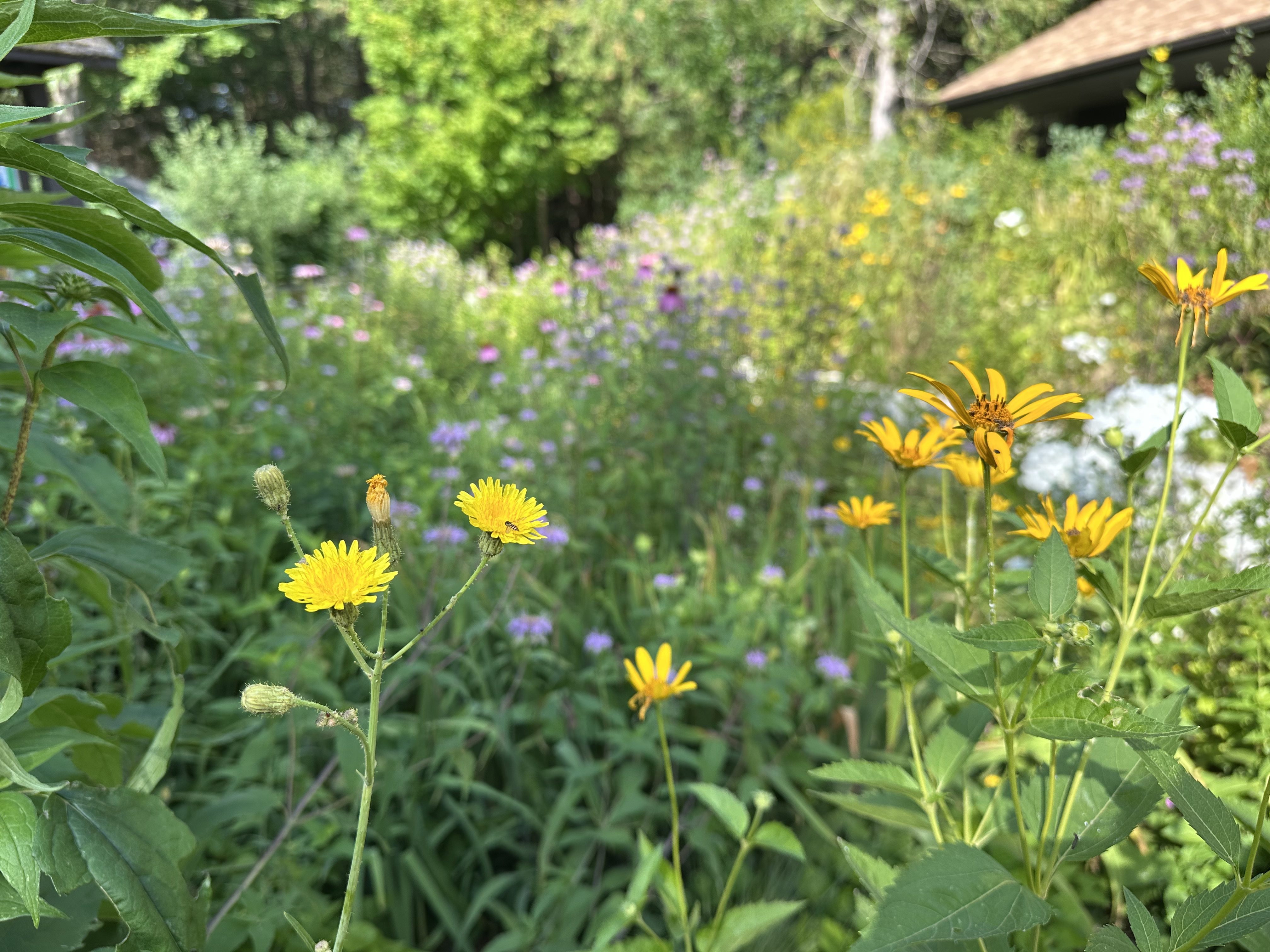
RVCA’s first demonstration rain garden was built outside of the interpretation centre at Baxter Conservation Area. Downspouts collect rainwater from the building’s roof and directs it into a sunken garden planted with deep rooted, water-loving native wildflowers. The garden collects water after a storm and slowly releases it into the ground.
Portland Sustainable Drainage Project
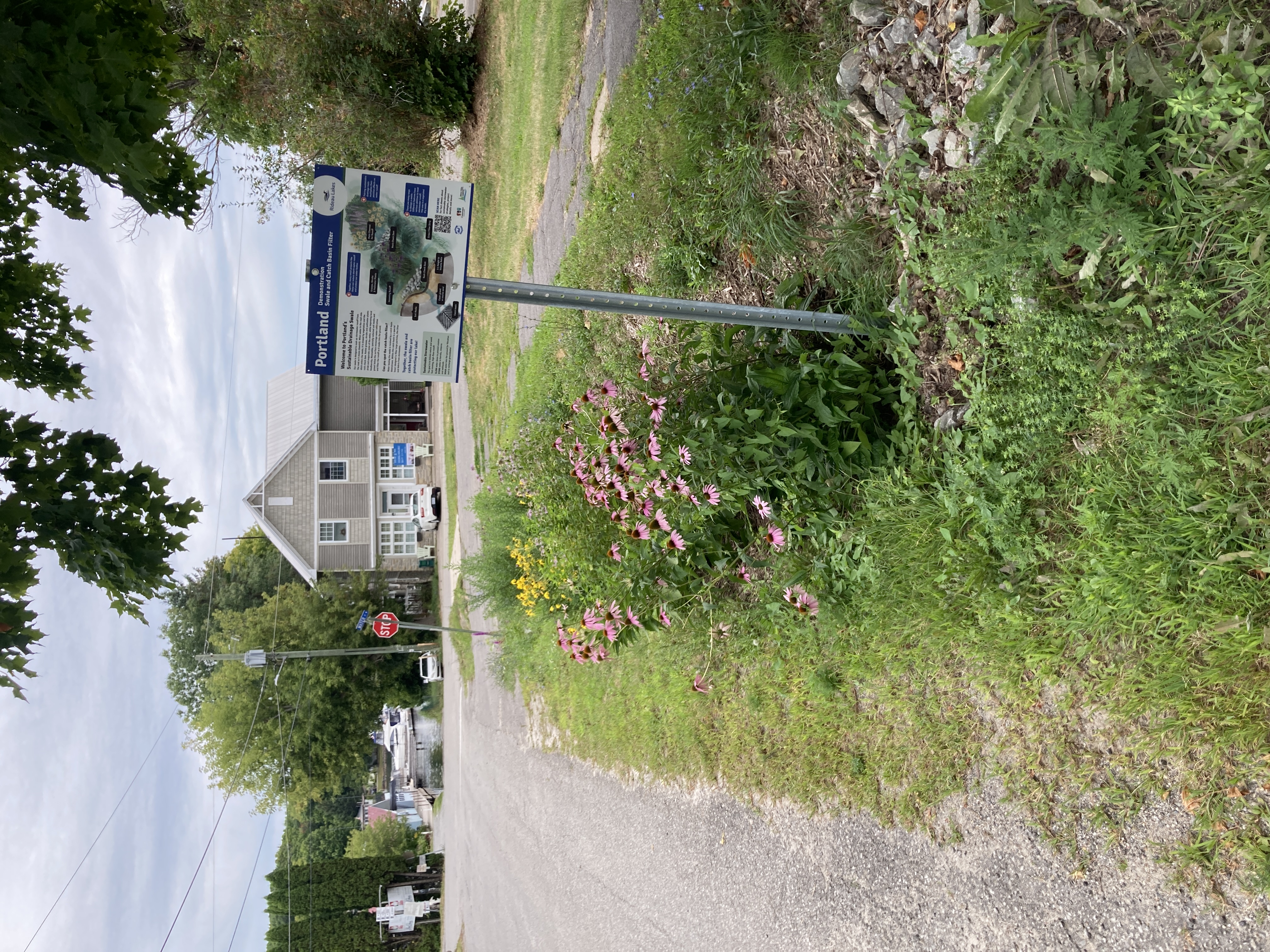
In partnership with the Township of Rideau Lakes, Cataraqui Region Conservation Authority and Big Rideau Lake Association, the RVCA led a sampling and monitoring pilot program in Portland to recommend sustainable drainage practices and develop a number of resources to help landowners across the watershed embrace best practices for sustainable drainage on their properties.
More details:

Perth Wildlife Reserve Rain Garden
In 2025, a demonstration rain garden was planted by RVCA’s Board of Directors. Native, pollinator friendly plants including <insert list> were planted to help soak stormwater into the ground, provide habitat and highlight the beauty of Ontario’s native plants.
Kirkham Crescent, Richmond
RVCA partnered with the City of Ottawa in 2023 to plant 4,400 trees over 5.4 acres in a floodplain along Flowing Creek, converting a corn field into a swampy woodland paradise. The project focussed on planting climate change-adapted species (shagbark hickory and swamp white oak) mixed with locally adapted species (silver maple, pine, cedar, and spruce). A partnership with the University of Guelph’s Elm Recovery Program and the City of Ottawa allowed RVCA to plant 25 disease-tolerant seedlings descended from some of the largest, healthiest elms in Ontario. Some of the seedlings came from local parent trees while others were from Southern Ontario, creating a potential seed orchard for resistant elms in the future. RVCA staff planted, tree guarded, monitored, and mowed the property for 3 years to ensure the trees were established. The site is also home to the RVCA's 7 millionth tree planted across the watershed.
More details:
Darou Property, Perth ON
In 2024, the RVCA planted more than 12,000 trees over 16 acres on the publicly-owned Darou Farm property in Perth to provide a visual buffer for the landfill as well as shelter for trail users. The planting included all-native species with a mix of bur oak, silver maple, tamarack, white cedar, white pine and white spruce. RVCA staff continue to monitor the site and will mow between the rows for 2 years after planting. The survival rate in 2025 was 83%.
More details:
Hutton Marsh Restoration Project
Since 2019, RVCA has partnered with Leeds-Grenville Stewardship Council, Ducks Unlimited, Wildlife Habitat Canada, the Rideau Valley Conservation Foundation and local landowners to restore the marsh at Motts Mills Conservation Area to a more natural state. The wetland had become choked and crowded, with almost no open water to support waterfowl or other open water species. Three phases of work have opened up several acres of ponds and more than a kilometre of open-water channels to encourage increased biodiversity in the marsh. In 2025, RVCA staff also added sandy nesting habitat for endangered Blandings turtles.
Stillwater Wetland Restoration Project
In 2018, the City of Ottawa’s Stage 2 LRT construction triggered a wetland restoration project at Stillwater Wetland along Moodie Drive. The City was required to offset downstream flood storage losses, and the RVCA and its partners saw an opportunity to rejuvenate a damaged wetland complex at the same time.
The multi-year project has since realigned a section of Stillwater Creek to a more natural meander, added 10,000 cubic metres of flood storage capacity in a newly created wetland, and added another four smaller wetland cells on the southern side of the property. Dozens of native bird, amphibian, turtle and plant species have returned to the site, including species at risk such as the western chorus frog, barn swallow and short-eared owl.
More details:
Black Rapids Wetland Restoration Project
Completed in 2016, this project doubled the Black Creek wetland near Barrhaven to nearly 7,000 m2 and reconnected a local tributary to support improved amphibian breeding, fish habitat and bird foraging. With support from the National Capital Commission (NCC) and the Great Lakes Guardian Community Fund, the wetland now boasts a variety of side slopes, woody debris and native trees, shrubs and wetland vegetation.